Showing posts with label African American. Show all posts

Saturday, April 22, 2023

Native Americans: When did humans migrate to the Americas?

 Native Americans


Academics generally believe that humans reached North America south of the Laurentide Ice Sheet at some point between 15,000 and 20,000 years ago. Some archaeological evidence suggests the possibility that human arrival in the Americas may have occurred prior to the Last Glacial Maximum more than 20,000 years ago.


When did humans migrate to the Americas?
approximately 13,000 to 13,500 years ago
In the 1970s, college students in archaeology such as myself learned that the first human beings to arrive in North America had come over a land bridge from Asia and Siberia approximately 13,000 to 13,500 years ago. These people, the first North Americans, were known collectively as Clovis people.


So where did the first humans enter the Americas? The currently favored theory is that humans migrated via the Bering land bridge along the western Pacific coastline at a time when sea levels were lower, exposing an ice-free coastline for travel with the possibility for transport over water.


Thousands of years before Europeans began crossing the vast Atlantic by ship and settling en masse, the first immigrants arrived in North America from Asia. They were Native American ancestors who crossed a narrow spit of land connecting Asia to North America at least 20,000 years ago, during the last Ice Age.Dec 21, 2018


What groups of people migrated to the Americas involuntarily?
While European immigrants were coming to America to escape political or religious persecution or to pursue a dream of economic security, Africans came involuntarily and were exploited to produce prosperity for others.


How did Africans get to America?
Africans came to the New World in the earliest days of the Age of Exploration. In the early 1500s, Africans trekked across the many lands in North, Central, and South America that were claimed by Spain, some coming in freedom and some in slavery, working as soldiers, interpreters, or servants.


While we commend Christopher Columbus (or should we say, Cristobal Colon) for sailing the seas in search of new land on Europe's behalf, he was not the first to make that journey. In fact, widely untaught evidence exists that Africans sailed to the Americas and settled centuries before Columbus.


According to an American historian and linguist Leo Weiner of Harvard University, one of the strongest pieces of evidence to support the fact that Africans sailed to America before Christopher Columbus was a journal entry from Columbus himself.

In Weiner’s book, “Africa and the Discovery of America,” he explains that Columbus noted in his journal that the Native Americans confirmed “black skinned people had come from the south-east in boats, trading in gold-tipped spears.” It was found also that the ratio of properties of gold, copper, and silver alloy were identical to the spears then being forged in African Guinea.

Enormous Olmec head statues with African facial characteristics found throughout Central and South America support that Africans had settled in America long before its apparent “discovery.” Ranging up to 11.15 feet in height and weighing 30 to 40 tons, these statues generally depict helmeted black men with large eyes, broad fleshy noses and full lips.

The first of these heads was discovered by explorer Jose Melgar in Veracruz in 1862. Melgar wrote that “what astonished me was the Ethiopic type which it represents. I reflected that there had undoubtedly been blacks in this country.” The headpiece worn on these Olmec sculptures is related to a type of war helmet identified as connecting them to Egyptian region Nubians.

In truth, Africans began coming to the Americas thousands of years before Columbus; and the evidence of their presence, though systematically ignored by mainstream and K-12 education curriculum, is overwhelming and undeniable.

Even early Mexican scholars were convinced that the impact of the black explorers on the New World was profound and enduring. One author, J.A. Villacorta, has written: “Any way you view it, Mexican civilization had its origin in Africa.” Indian scholar, Rafique Jairazbhoy appears to have been right when he wrote: “The black began his career in America not as slave but as master.”

It’s about time that America realizes that fact also.

DeWayne Johnson (dewayne.johnson@iamabridgebuilder.us) is co-founder and executive consultant at BridgeBuilder Education & Investments, LLC.


How did Indians get to America?

Scientists have found that Native American populations - from Canada to the southern tip of Chile - arose from at least three migrations, with the majority descended entirely from a single group of First American migrants that crossed over through Beringia, a land bridge between Asia and America that existed during the ...Jul 12, 2012


African Americans: Forced and Voluntary Immigrants Who Helped Shape America


We offer two historical perspectives on the African American experience. The first emphasizes the economic and cultural impact of Africans and their descendants in the United States. The second places Africans within the context of the immigrant experience, pointing out that African immigrants have been as ambitious and creative as any others and that their desire to live the American dream remains undiminished.

First: Different forces prompted immigration to the United States for each ethnic group. For the ancestors of most African Americans, the need for workers on plantations drove the immigration process. For nearly four centuries, European slave ships transported captive Africans from their homelands to the Americas. These Africans came to a land of bondage and faced a severe test of their powers of endurance. Among African Americans, the search for freedom in America has continued for generations.

Africans made up a substantial percentage of the population of British colonial America and then the United States. In 1790 the first census revealed that African Americans made up more than 19 percent of the non-Indian population. The southern states, where the economy relied on enslaved laborers, had African majorities in many areas. For several decades captive Africans continued to arrive on slave ships to be sold to plantation owners or local slave merchants in such cities as Baltimore, Charleston and New Orleans.

While European immigrants were coming to America to escape political or religious persecution or to pursue a dream of economic security, Africans came involuntarily and were exploited to produce prosperity for others.

Second: Conventional wisdom encourages the belief that people of African descent came to the United States as latecomers, with the only early immigrants arriving as enslaved people and becoming, through acquired status and conditioning, a confined, secluded, homogeneous and subordinate group in society. Yet so much of this conventional thinking is untested and perhaps untrue.

Myths, mistakes or misunderstandings, the misconceptions nevertheless play a crucial role in shaping the images held about African Americans and the way they are regarded and treated in everyday life as well as in popular history. One such image ignores the fact that some came to this country knowingly, sometimes more willingly than others, in hopes of bettering their personal, political or socioeconomic condition. Despite their fears as people of color, they came from distant homelands, attracted to the unlimited possibilities promised in the lore of the American way of life. (Text and photographs from the Americans All Classroom Resources.)


Native American populations descend from three key migrations
12 July 2012


Scientists have found that Native American populations - from Canada to the southern tip of Chile - arose from at least three migrations, with the majority descended entirely from a single group of First American migrants that crossed over through Beringia, a land bridge between Asia and America that existed during the ice ages, more than 15,000 years ago.


By studying variations in Native American DNA sequences, the international team found that while most of the Native American populations arose from the first migration, two subsequent migrations also made important genetic contributions. The paper is published in the journal Nature today.

"For years it has been contentious whether the settlement of the Americas occurred by means of a single or multiple migrations from Siberia," said Professor Andres Ruiz-Linares (UCL Genetics, Evolution and Environment), who coordinated the study. "But our research settles this debate: Native Americans do not stem from a single migration. Our study also begins to cast light on patterns of human dispersal within the Americas."

In the most comprehensive survey of genetic diversity in Native Americans so far, the team took data from 52 Native American and 17 Siberian groups, studying more than 300,000 specific DNA sequence variations called Single Nucleotide Polymorphisms to examine patterns of genetic similarities and differences between the population groups.

The study of Native American populations is technically very challenging because of the widespread occurrence of European and African mixture in Native American groups


Professor Andres Ruiz-Linares

The second and third migrations have left an impact only in Arctic populations that speak Eskimo-Aleut languages and in the Canadian Chipewyan who speak a Na-Dene language. However, even these populations have inherited most of their genome from the First American migration. Eskimo-Aleut speakers derive more than 50% of their DNA from First Americans, and the Chipewyan around 90%. This reflects the fact that these two later streams of Asian migration mixed with the First Americans they encountered after they arrived in North America.

"There are at least three deep lineages in Native American populations," said co-author David Reich, Professor of genetics at Harvard Medical School. "The Asian lineage leading to First Americans is the most anciently diverged, whereas the Asian lineages that contributed some of the DNA to Eskimo-Aleut speakers and the Na-Dene-speaking Chipewyan from Canada are more closely related to present-day East Asian populations."

The team also found that once in the Americas, people expanded southward along a route that hugged the coast with populations splitting off along the way. After divergence, there was little gene flow among Native American groups, especially in South America.

Two striking exceptions to this simple dispersal were also discovered. First,  Central American Chibchan-speakers have ancestry from both North and South America, reflecting back-migration from South Americaand mixture of two widely separated strands of Native ancestry. Second, the Naukan and coastal Chukchi from north-eastern Siberia carry 'First American' DNA. Thus, Eskimo-Aleut speakers migrated back to Asia, bringing Native American genes.

The team's analysis was complicated by the influx into the hemisphere of European and African immigrants since 1492 and the 500 years of genetic mixing that followed. To address this, the authors developed methods that allowed them to focus on the sections of peoples' genomes that were of entirely Native American origin.

"The study of Native American populations is technically very challenging because of the widespread occurrence of European and African mixture in Native American groups," said Professor Ruiz-Linares.

"We developed a method to peel back this mixture to learn about the relationships among Native Americans before Europeans and Africans arrived," Professor Reich said, "allowing us to study the history of many more Native American populations than we could have done otherwise."

The assembly of DNA samples from such a diverse range of populations was only possible through a collaboration of an international team of 64 researchers from the Americas (Argentina, Bolivia, Brazil, Canada, Chile, Colombia, Costa Rica, Guatemala, Mexico, Peru, Russia and the USA), Europe (England, France, Spain and Switzerland) and Russia.

Ancient Genome Suggests Native Americans Really Did Descend from the First Americans

The new analysis of "Clovis boy" DNA also stirs an ethics debate about the handling of tribal remains


By Ewen Callaway, Nature magazine on February 12, 2014


The remains of a young boy, ceremonially buried some 12,600 years ago in Montana, have revealed the ancestry of one of the earliest populations in the Americas, known as the Clovis culture.

Published in this issue of Nature, the boy’s genome sequence shows that today’s indigenous groups spanning North and South America are all descended from a single population that trekked across the Bering land bridge from Asia (M. Rasmussen et al. Nature 506, 225–229; 2014). The analysis also points to an early split between the ancestors of the Clovis people and a second group, whose DNA lives on in populations in Canada and Greenland (see page 162).

But the research underscores the ethical minefield of studying ancient Native American remains, and rekindles memories of a bruising legal fight over a different human skeleton in the 1990s.


To avoid such a controversy, Eske Willerslev, a paleobiologist at the University of Copenhagen who led the latest study, attempted to involve Native American communities. And so he embarked on a tour of Montana’s Indian reservations last year, talking to community members to explain his work and seek their support. “I didn’t want a situation where the first time they heard about this study was when it’s published,” he says.

Construction workers discovered the Clovis burial site on a private ranch near the small town of Wilsall in May 1968 (see ‘Ancient origins’). About 100 stone and bone artefacts, as well as bone fragments from a male child aged under two, were subsequently recovered.

The boy’s bones were found to date to the end of the Clovis culture, which flourished in the central and western United States between about 13,000 and 12,600 years ago. Carved elk bones found with the boy’s remains were hundreds of years older, suggesting that they were heirlooms. The ranch, owned by Melvyn and Helen Anzick, is the only site yet discovered at which Clovis objects exist alongside human bones. Most of the artefacts now reside in a museum, but researchers returned the human remains to the Anzick family in the late 1990s.

At that time, the Anzicks’ daughter, Sarah, was conducting cancer and genome research at the National Institutes of Health in Bethesda, Maryland, and thought about sequencing genetic material from the bones. But she was wary of stoking a similar debate to the one surrounding Kennewick Man, a human skeleton found on the banks of the Columbia River in Kennewick, Washington, in July 1996. Its discovery sparked an eight-year legal battle between Native American tribes, who claimed that they were culturally connected to the individual, and researchers, who said that the roughly 9,000-year-old remains pre-dated the tribes.

The US government sided with the tribes, citing the federal Native American Graves Protection and Repatriation Act (NAGPRA). The act requires that human remains discovered on federal lands — as Kennewick Man was — are returned to affiliated tribes for reburial. But a court ruled that the law did not apply, largely because of the age of the remains, and ordered that Kennewick Man be stored away from public view in a museum.


Sarah Anzick sought the advice of local tribes over the Clovis boy, but she could not reach a consensus with the tribes on what to do. She gave up on the idea, stored the bones in a safe location and got on with her other research.

In 2009, archaeologist Michael Waters, of Texas A&M University in College Station, contacted Anzick with the idea of sending the remains to Willerslev’s lab. (In early 2010, the lab published one of the first genome sequences of an ancient human, a 4,000-year-old resident of Greenland; see M. Rasmussen et al. Nature 463, 757–762; 2010.) “I said, ‘I will allow you guys to do this, but I want to be involved,’” recalls Anzick, who has published more than a dozen papers in leading journals.

In Copenhagen, she extracted DNA from fragments of the boy’s skull ready for mitochondrial genome sequencing, which offers a snapshot of a person’s maternal ancestry. Back in Montana months later, she received the sequencing data and discovered that the genome’s closest match was to present-day Native Americans. “My heart just stopped,” she says.

Right to remains
After Willerslev’s team confirmed the link by sequencing the boy’s nuclear genome (a more detailed indicator of ancestry), Willerslev sought advice from an agency that handles reburial issues. He was told that, because the remains were found on private land, NAGPRA did not apply and no consultation was needed. Despite this, Willerslev made his own attempt to consult local tribes. This led to a meeting in September at the burial site, with Anzick, Willerslev and their co-author Shane Doyle, who works in Native American studies at Montana State University in Bozeman, and is a member of the Crow tribe.

“That place is very special to me, that’s my ancestral homeland,” says Doyle. He told Willerslev and Anzick that they should rebury the child where he was found. “I think you need to put the little boy back where his parents left him,” Doyle recalls telling them.


Doyle and Willerslev then set off on a 1,500-kilometer road trip to meet representatives of four Montana tribes; Doyle later consulted another five. Many of the people they talked to had few problems with the research, Doyle says, but some would have preferred to have been consulted before the study started, and not years after.

Willerslev says that researchers studying early American remains should assume that they are related to contemporary groups, and involve them as early as possible. But it is not always clear whom to contact, he adds, particularly when remains are related to groups spread across the Americas. “We have to engage with Native Americans, but how you deal with that question in practice is not an easy thing,” he says.

Hank Greeley, a legal scholar at Stanford University in California who is interested in the legal and ethical issues of human genetics, commends the approach of Willerslev’s team. But he says that there is no single solution to involving Native American communities in such research. “You’re looking to try to talk to the people who might be most invested in, or connected with, particular sets of remains,” he advises.

Dennis O’Rourke, a geneticist at the University of Utah in Salt Lake City, who studies ancient DNA from populations native to the islands around Alaska, notes that indigenous groups have varying concerns: some want remains reburied, others do not, for instance.

The Montana tribes overwhelmingly wanted the Clovis boy’s bones interred. Plans for a reburial ceremony, possibly at an undisclosed site, are now being hashed out, with the Crow Nation playing a lead role. It is expected to take place in the spring, after the ground thaws.


This article is reproduced in Scientific American with permission from the magazine Nature. The article was first published on February 12, 2014.

Wednesday, November 25, 2020

BRUCE, Blanche Kelso 1841–1898 Black Senator


A slave who became a successful plantation owner, Blanche Kelso Bruce was the second African American to serve in the United States Senate and the first to be elected to a full term. Though Bruce focused on protecting the rights of freedmen and other minorities, his life of social privilege in the nation’s capital insulated him from the deprivations suffered by many of his black constituents. Bruce moved among elite circles of wealthy white politicians, including his close friends Senator Roscoe Conkling of New York and Senator Lucius Q. C. Lamar of Mississippi. “Mr. Bruce’s conduct in the senate has been such as not to alienate himself from the Southern people,” noted Lamar, who had drafted the Mississippi ordinance of secession, served as a Confederate diplomat, and returned to the U.S. Congress as an unabashed opponent of Reconstruction. “[Bruce] has not joined in the abusive warfare on the South that many of his Republican colleagues in the Senate Chamber have constantly pursued,” Lamar added. “He is an intelligent man, and the best representative of his race in public life.”1


Blanche Bruce was born near Farmville, Virginia, on March 1, 1841. His mother, Polly Bruce, was a slave, and his father, Pettus Perkinson, was his mother’s owner and the son–in–law of her deceased former owner, Lemuel Bruce. Bruce’s first name was originally “Branch,” but he changed it to “Blanche” as a teenager. For unexplained reasons, he later adopted the middle name “Kelso.”2 One of 11 children, Blanche Bruce was a personal servant to his half brother William Perkinson.3 Even though he was a slave, Bruce was accorded a status nearly equal to the Perkinson children’s. Described by contemporaries as an eager learner, he studied with William’s private tutor. But despite such benign treatment, Bruce escaped to Kansas during the Civil War and attempted to enlist in the Union Army. His application was refused, and he settled in Lawrence to teach school. Returning to Hannibal, Missouri, near the war’s end, he organized the state’s first school for black children in 1864. Though he planned to attend Ohio’s Oberlin College to study for his divinity degree, he could not afford the tuition.4 He spent the remainder of the 1860s working as a steamboat porter out of St. Louis on the Mississippi River, moving to Mississippi in 1869 to find more–lucrative opportunities.


Upon his arrival in Mississippi, Blanche Bruce witnessed a stump speech by Republican gubernatorial candidate James Alcorn, which inspired him to enter politics.5 On an 1870 trip to Jackson, the young, articulate Bruce caught the eye of white Republicans. That same year, the district military commander, General Adelbert Ames, appointed Bruce registrar of voters in Tallahatchie County. When the first postwar Mississippi legislature met in late 1870, Bruce, who was large and imposing, was elected sergeant at arms. In 1871, he was elected to the joint office of sheriff and tax collector of Bolivar County. The following year, the Republican state board of education appointed him county superintendent of education. In a singular achievement, Bruce turned the Bolivar County school system into one of the best in the state, creating a segregated but equally funded system that boasted the support of both blacks and whites.6 Bruce’s wealth also increased. He invested in land, becoming a successful planter by the late 1870s. In 1872, he was named to the board of levee commissioners for a district containing three counties. The commissioners were empowered to raise revenue and build embankments in the Mississippi Delta region.


By the mid–1870s, Blanche K. Bruce was among the best–recognized politicians in the state.7 However, he faced a difficult decision when the state Republican Party split into two factions.A moderate, primarily white faction, led by then–Senator Alcorn, began ignoring African Americans’ demands for civil rights. Then Alcorn’s political rival Governor Ames adopted a more radical stance, abandoning efforts to reach out to conservative whites. Although Bruce disagreed with the Radical Republicans, because he believed that political stability required biracial cooperation, he allied himself nonetheless with the Ames faction so as to support his fellow blacks. Governor Ames offered Bruce the position of lieutenant governor in 1873, but Bruce refused, eyeing the governor’s vacant seat in the U.S. Senate.8 In January 1874, the state legislature met to nominate a U.S. Senator to fill Ames’s unexpired term, and to select someone for a full six–year term beginning in the 44th Congress (1875–1877). Unlike Senator Hiram Revels before him, Bruce was selected to serve the full term primarily by black Republican colleagues, taking 52 of the 84 votes in the second ballot over Republican carpetbaggers, Representative George McKee and U.S. District Attorney G. Wiley Wells. The full legislature elected Bruce nearly unanimously on February 4, 1874.9


When Bruce arrived in the U.S. Senate Chamber on March 5, 1875, precedent called for his state’s senior Senator to escort him to the podium, but Senator Alcorn snubbed the junior Senator because of Bruce’s alliance with Governor Ames. Bruce walked up the aisle alone until Republican Senator Roscoe Conkling of New York offered to escort him. Thereafter Bruce had a powerful ally in Conkling, who coached him in Senate procedures and procured him assignments on influential committees, such as the Education and Labor, Manufactures, and Pensions committees.


Bruce remained quiet during the special session of the Senate, and concerned white Republicans feared he would shirk his responsibility to Mississippi by deferring to the Radical Republican leadership; black political leaders doubted Bruce would stand up for freedmen, who faced terrible violence from white supremacists implementing the Mississippi Plan.10 Bruce may have been following the time–honored tradition that a freshman remains studious and silent during his first few months in the Senate Chamber. He later noted that success in the Senate required managing diplomacy: “The novelty of my position [compels me] to cultivate and exhibit my honorable associates a courtesy that would inspire reciprocal courtesy.”11


Bruce finally broke his silence on March 3, 1876, in defense of southern blacks, petitioning his colleagues to seat Pinckney B. S. Pinchback, a black Senator–elect from Louisiana and a personal friend. But Pinchback’s political opponents questioned his selection by the state legislature due to corruption charges and despite Bruce’s pleas, the Senate narrowly rejected Pinchback’s claim to the seat.12 Bruce followed this speech with a demand for an inquiry into the violent 1875 Mississippi gubernatorial election. The Senate passed a bill to investigate the political conditions in Mississippi during the previous election; however, the Democratic House did not act on the legislation.13


Bruce’s advocacy for African Americans was most evident in issues affecting black war veterans. He was a staunch defender of black servicemen, promoting integration of the armed forces and fair treatment. On April 10, 1878, he unsuccessfully attempted to desegregate the U.S. Army, citing the U.S. Navy as a precedent.14 Two years later, Bruce delivered a speech asking the War Department to investigate the brutal hazing of black West Point cadet Johnson C. Whittaker. The following year, he supported legislation that prevented discrimination against the heirs to black soldiers’ Civil War pensions.15 He also submitted a bill in 1879 to distribute money unclaimed by black Civil War soldiers to five African–American colleges. As the bill gained publicity, however, more claimants came forward and depleted the fund. The Senate Committee on Education and Labor eventually reported against the bill.16


Senator Bruce also favored the interests of other ethnic and racial minorities. During a debate on the Chinese Exclusion Act, with which he disagreed, Bruce became the first black Senator to preside over a Senate session, on February 14, 1879. Bruce also demanded more–equitable treatment for Native Americans. On April 6, 1880, he railed against federal management of Native Americans in a Senate Floor speech. “Our Indian policy and administration seem to me to have been inspired and controlled by stern selfishness,” Bruce declared. Admonishing those who placed the goal of territorial expansion over honoring treaties, he continued, “We have in the effort to realize a somewhat intangible ideal, to wit, the preservation of Indian liberty and the administration and exercise of national authority.… The political system that underlies our Indian policy … is foreign in its character; the individuals and the system of laws are not American.”17


In April 1879, Bruce was appointed chairman of the Select Committee to Investigate the Freedmen’s Savings and Trust Company after its failure in 1874. Comprising three southern Democrats and three Republicans, including Bruce, the committee set out to investigate the more–than 600 pages of testimony and documentation collected at the bank’s closure to identify employees who were guilty of fraud and incompetence. The resultant Senate bill to reimburse former customers did not pass, but Bruce and his fellow Republicans succeeded in convincing the federal government to purchase the bank’s former Washington, DC, headquarters to provide the company with some capital.18


As a landowner, Bruce was interested in the financial health of property owners on the banks of the Mississippi River. He supported many internal improvements and financial incentives, including the creation of a Mississippi Valley railroad and a refund for cotton taxes levied during the Civil War. In the 45th Congress (1877–1879), he served as chairman of the Select Committee on the Mississippi River. In this position, he fought for federal funding to control flooding and advocated the creation of a channel and levee system for parts of the river’s edge. Bruce introduced a measure in 1879 to form the Mississippi River Improvement Association, a federally funded organization to control river flooding and protect waterfront property.19


Bruce’s favor among white conservative voters was not matched among his black constituents. Despite Bruce’s political advocacy, Mississippi blacks questioned his commitment to the plight of freedmen in collapsing Reconstruction governments. Bruce’s privileged background often alienated him from his poorer constituents.20 He and his wife, Josephine Beall Wilson of Ohio—the first black teacher in the Cleveland public schools and the daughter of a prominent mixed-race dentist—whom he married on June 24, 1878, became fixtures in Washington, DC, high society. As a matter of policy, Bruce hesitated to support the westward migration of Black Americans from the South to Kansas and other Plains states. At the urging of his constituents, he introduced legislation that would assist destitute black farmers in Kansas by encouraging the federal government to issue more western land grants. His bill died in committee; however, he managed to appropriate the distribution of duty–free British cotton clothing to impoverished Kansas communities.21 Yet these efforts were judged lacking by the black community. Nor did the white establishment look favorably on Bruce. Despite Bruce’s moderation and political connections, rising “reform” politicians in power in Mississippi, who wished to recreate a “lily white” government, discounted him because of his race. When the Democratic Mississippi legislature gathered to select a new Senator in January 1880, Bruce did not even attempt a bid for a second term. The legislature chose Democrat James Z. George to succeed him.


After leaving the Senate, Bruce remained active in the Mississippi and national Republican parties.22 He briefly served as presiding officer at the 1880 Republican National Convention in Chicago, where he received eight votes for the nomination for Vice President. When the convention returned to Chicago in 1888, Bruce received 11 such votes. He also served as superintendent for black achievement at the World’s Cotton Exposition in New Orleans from 1884 to 1885 before returning to Washington to seek presidential patronage positions, his only hope of sustaining his political career. Though he rejected an offer to be Minister to Brazil because that country practiced slavery, Bruce received many endorsements for a post in President James Garfield’s Cabinet in 1881. Garfield ultimately passed him over, but Bruce obtained a prime position as register of the U.S. Treasury and remained there until 1885. In 1889, President Benjamin Harrison appointed him recorder of deeds for the District of Columbia; however, he left that office in 1893 after receiving an honorary LL.D. and joining the board of trustees at Howard University.23 Bruce returned to the Treasury post in 1897 after being considered for a Cabinet position in President William McKinley’s administration. He continued to reside in Washington until he succumbed to a kidney ailment due to complications from diabetes on March 17, 1898.24

Monday, February 10, 2020

Recognizing African Americans Who Contributed to Scientific Advancement


Image result for Marie M. Daly

Recognizing African Americans Who Contributed to Scientific Advancement


By Elizabeth Owuor
To honor Black History Month, 23andMe is sharing the untold stories of a few of the African-American scientists and figures who contributed to science each of whom made their mark despite great societal and institutional obstacles.
Overlooked, intentionally erased from the history books, or simply discredited. Henrietta Lacks, a young African American mother from Baltimore, made her contribution to scientific advancement without ever knowing it. Cells from the tumor that killed her were taken and regrown in labs around the world without her or her family’s permission and became one of the most important cancer cell lines in medical history.
After visiting Dr. Howard Jones at the Johns Hopkins Medical Center in 1947, Lacks underwent a gynecological tumor biopsy and her cells were sent to a neighboring lab – without her knowledge or consent — where they were later harvested to create HeLa Cells, the first  infinitely reproducing cell line in medicine.
Image result for Henrietta Lacks
In fact, no one knew of Lack’s essential contribution to science and the world-at-large until it was finally acknowledged nearly 40 years after her first visit to Johns Hopkins in Baltimore. But Lacks isn’t the only African-American to aide scientific advancement without being fully acknowledged or credited. Throughout the ages, other Black figures have helped advance chemistry, genetics, pathology, and other essential scientific fields without getting due credit. In an effort to honor these hidden figures, we’ve collected a short roundup of a few of the overlooked sheroes and heroes whose contributions, even in the face of racial persecution and institutional disenfranchisement, left an important mark on the world of science and beyond.
Alice Ball: The Collector of Many Firsts
1892-1916
Image result for Alice Ball
Chemist Alice Ball didn’t shy away from being a pioneer: the first African American and the first woman to graduate with a Master’s in chemistry from the College of Hawaii (now the University of Hawaii), Ball later went on to be the first female chemistry professor at her alma mater.
But Ball was already accomplishing firsts long before graduating. A native of Seattle, she was born in 1892, at a time when women — particularly women of color — were denied access to education and employment. Ball earned her undergraduate degrees in pharmaceutical chemistry and pharmacy from the University of Washington, before pursuing her graduate work in Hawaii. During the course of her career, she pioneered a treatment for leprosy, or Hansen’s disease, that was eventually coined the “Ball Method” due to its highly effective treatment of the symptoms of this vexing disease. The first injectable treatment of its kind, Ball’s treatment used oil from the chaulmoogra tree, which had previously only been used topically with mixed results. Medical professionals relied on Ball’s invention for 20 years before a new treatment was introduced.
Sadly, Ball wasn’t given full credit for her groundbreaking invention until decades after it was made available to the public. Her untimely death at 24 due to chlorine poisoning in her lab contributed to this, but so did the fact that the president of her university initially took credit for work. Although long overdue, Alice Ball was finally remembered by history in 2010 when the University of Hawaii declared February 29th “Alice Ball Day,” erecting a statue in her honor.

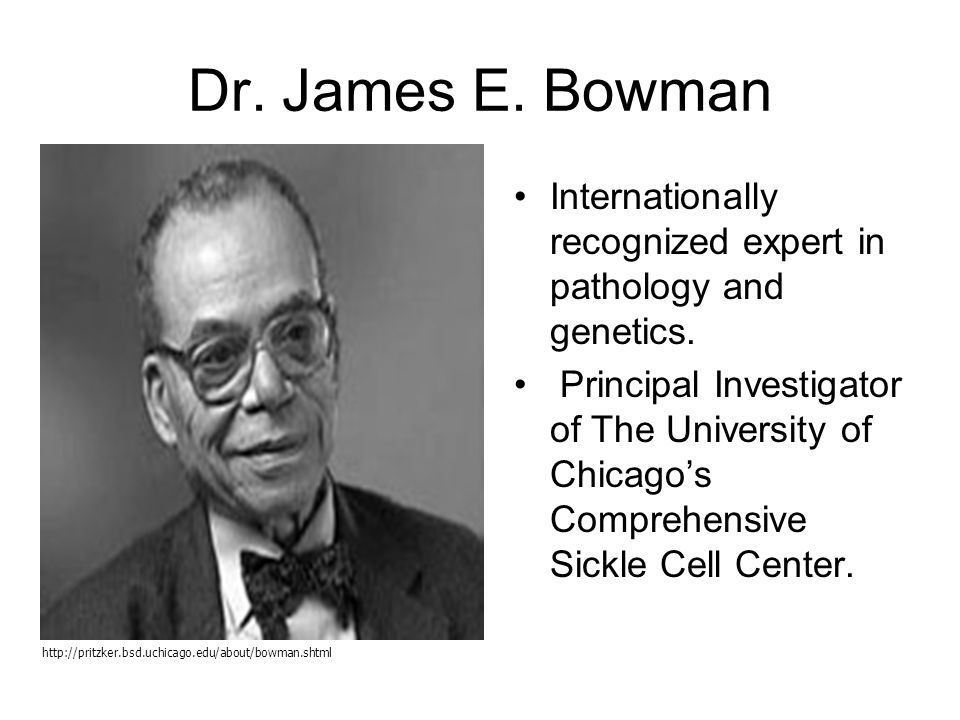
Dr. James Bowman: The Science Renaissance Man
1923-2011
Image result for Dr. James Bowman
Segregation may have hindered James Bowman from pursuing his dream of becoming an Army medical officer, but it didn’t stop the trailblazer from forging his own path in medicine and genetics despite the many obstacles erected by a racist society.
A 1943 biology graduate of Howard University, Bowman stayed remained at the university to secure his medical degree as part of the of the U.S. Army Medical Corps. He later interned at the Freedmen’s Hospital in Washington, D.C. and completed his residency in pathology at Chicago’s St. Luke’s Hospital from 1947 to 1952.
Always one to continually expand his knowledge base through research, Bowman moved to Iran in 1955 to study G6PD deficiency, a rare genetic disorder also known as  favism, that is linked to episodes of anemia and affects one in ten African American men. After successfully diagnosing an Iranian patient with the condition, he took his penchant for research and scientific rigor around the world. From 1961 to 1962, Bowman studied genetics at the Galton Laboratory at University College London and then later settled at the University of Chicago, where his scientific work took him to Uganda, Mexico, Ghana and other nations.
Eventually publishing more than 90 scholarly papers on human genetics, Bowman was also a fierce advocate for African-Americans. He was instrumental in ensuring that governmental and medical institutions considered bioethics and consent when testing on historically marginalized populations.

Marie M. Daly: The Chemistry Pioneer
1921-2003
Image result for Marie M. Daly
The first black woman to receive a doctorate in chemistry in the United States, Marie M. Daly dedicated to spreading knowledge and conducting research. Daly pioneered innovative work on the relationship between chemistry and the human body. Inspired by her father who was hindered from completing his chemistry degree at Cornell University due to poverty, Daly received her bachelor’s degree with honors from Queens College in New York. She went on to receive a graduate degree at New York University, supporting her studies via work as a lab assistant.
After completing her master’s degree on an accelerated timeline, Daly began her doctoral studies in chemistry at Columbia University. She studied under the tutelage of Dr. Mary L. Caldwell, a celebrated female scientist who was dedicated to supporting other women in the field.
Ever the curious mind, Daly studied how the body digests food while at Columbia. Ultimately, she completed her doctorate in 1947 and became the first black woman in that nation to procure a chemistry Ph.D. But Daly didn’t stop her groundbreaking research there. After completing a seven-year research program at the Rockefeller Institute of Medicine, the scientist returned to her alma mater to investigate the relationship between clogged arteries and high cholesterol. In partnership with her colleague, Dr. Quentin B. Deming, Daly was responsible for revealing that dietary choices affect heart health and the circulatory system.
 Image result for Marie M. Daly
The Importance of Diversity in Genetic Research
Did you know that Africans and African Americans make up less than 4 percent of individuals included in genetic studies, according to a recent study? The fact that these individuals face many serious health outcomes and could benefit from the insights gained from genetic inquiry makes the present situation even more untenable. What’s more is that Africans and people of African ancestry are more genetically diverse than all the world’s populations combined. That’s why diversity in genetic research is so crucial. Insights for one group benefit all of us. And that’s not all, the need for diversity also extends to the scientists who conduct research. Ensuring that the scientific community looks more like the world around us will enable us to account for a wide-variety of perspectives. More diverse perspectives in the science community means better scientific research, and potentially more precise scientific advancements.

Know of any other hidden figures in the realm of scientific advancement? Join the conversation by commenting below.