Monday, March 23, 2020

Confirmed cases of coronavirus disease (COVID-19) Updated 3/23/2020

GP: Andrew Cuomo First State Drive -Through COVID-19 Testing Site Opens In New Rochelle

Cuomo Orders All Hospitals To Add Beds As New York Confirms 20,000 Coronavirus Cases
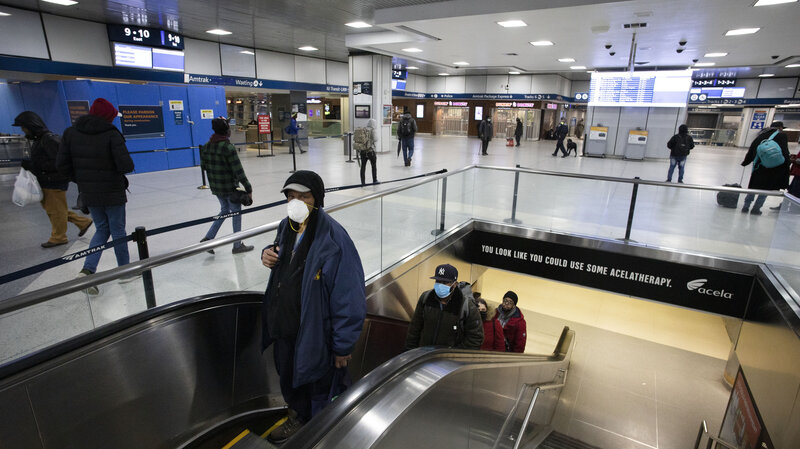
New York Gov. Andrew Cuomo says that in his state — the U.S. epicenter for the coronavirus — the wave of new cases is still going up. Here, commuters wearing masks pass through New York City's Penn Station on Monday.

Global coronavirus cases cross 350,000, death toll passes 15,000 as pandemic takes hold

PUBLISHED MON, MAR 23 20208:46 AM EDT UPDATED 2 HOURS AGO
William Feuer@WILLFOIA

KEY POINTS

  • COVID-19 has now infected more than 350,536 people, according to Johns Hopkins University, and killed at least 15,328 people.
  • Global cases have more than doubled in the past week, according to the World Health Organization, and worldwide deaths have nearly tripled.
  • Outside of China, where the virus emerged in December, Italy has the most confirmed cases with nearly 60,000.
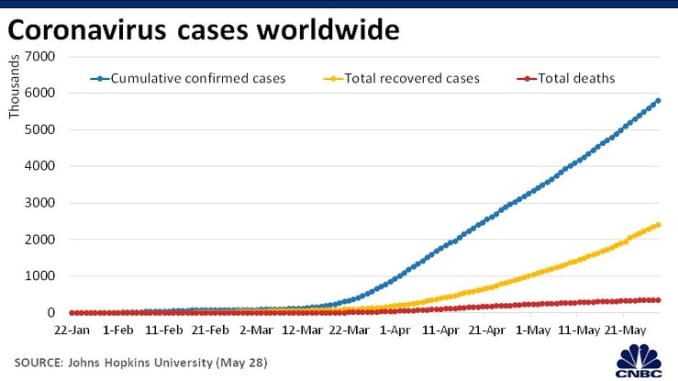


Chart: Coronavirus breakdown 200323

WHO launches global megatrial of the four most promising coronavirus treatments

By Kai Kupferschmidt, Jon CohenMar. 22, 2020 , 3:28 PM

Could any of these drugs hold the key to saving coronavirus disease 2019 (COVID-19) patients from serious harm or death? On Friday, the World Health Organization (WHO) announced a large global trial, called SOLIDARITY, to find out whether any can treat infections with the new coronavirus for the dangerous respiratory disease. It’s an unprecedented effort—an all-out, coordinated push to collect robust scientific data rapidly during a pandemic. The study, which could include many thousands of patients in dozens of countries, has been designed to be as simple as possible so that even hospitals overwhelmed by an onslaught of COVID-19 patients can participate.

With about 15% of COVID-19 patients suffering from severe disease and hospitals being overwhelmed, treatments are desperately needed. So rather than coming up with compounds from scratch that may take years to develop and test, researchers and public health agencies are looking to repurpose drugs already approved for other diseases and known to be largely safe. They’re also looking at unapproved drugs that have performed well in animal studies with the other two deadly coronaviruses, which cause severe acute respiratory syndrome (SARS) and Middle East respiratory syndrome (MERS).
Drugs that slow or kill the novel coronavirus, called severe acute respiratory syndrome coronavirus 2 (SARS-CoV-2), could save the lives of severely ill patients, but might also be given prophylactically to protect health care workers and others at high risk of infection. Treatments may also reduce the time patients spend in intensive care units, freeing critical hospital beds.

Scientists have suggested dozens of existing compounds for testing, but WHO is focusing on what it says are the four most promising therapies: an experimental antiviral compound called remdesivir; the malaria medications chloroquine and hydroxychloroquine; a combination of two HIV drugs, lopinavir and ritonavir; and that same combination plus interferon-beta, an immune system messenger that can help cripple viruses. Some data on their use in COVID-19 patients have already emerged—the HIV combo failed in a small study in China—but WHO believes a large trial with a greater variety of patients is warranted.

Enrolling subjects in SOLIDARITY will be easy. When a person with a confirmed case of COVID-19 is deemed eligible, the physician can enter the patient’s data into a WHO website, including any underlying condition that could change the course of the disease, such as diabetes or HIV infection. The participant has to sign an informed consent form that is scanned and sent to WHO electronically. After the physician states which drugs are available at his or her hospital, the website will randomize the patient to one of the drugs available or to the local standard care for COVID-19.

“After that, no more measurements or documentation are required,” says Ana Maria Henao-Restrepo, a medical officer at WHO’s Department of Immunization Vaccines and Biologicals. Physicians will record the day the patient left the hospital or died, the duration of the hospital stay, and whether the patient required oxygen or ventilation, she says. “That’s all.”

The design is not double-blind, the gold standard in medical research, so there could be placebo effects from patients knowing they received a candidate drug. But WHO says it had to balance scientific rigor against speed. The idea for SOLIDARITY came up less than 2 weeks ago, Henao-Restrepo says, and the agency hopes to have supporting documentation and data management centers set up next week. “We are doing this in record time,” she says.

It will be important to get answers quickly, to try to find out what works and what doesn’t work. We think that randomized evidence is the best way to do that.

Ana Maria Henao-Restrepo, World Health Organization
Arthur Caplan, a bioethicist at New York University Langone Medical Center, says he likes the study’s design. “No one wants to tax the frontline caregiver who’s overwhelmed and taking risks anyway,” Caplan says. Hospitals that aren’t overburdened might be able to record more data on disease progression, for instance by following the level of virus in the body, Caplan suggests. But for public health, the simple outcomes WHO seeks to measure are the only relevant ones for now, says virologist Christian Drosten of the Charité University Hospital in Berlin: “We don’t really know enough about this disease to be sure what it means when the viral load decreases in the throat, for instance.”

On Sunday, INSERM, the French biomedical research agency, announced it will coordinate an add-on trial in Europe, named Discovery, that will follow WHO’s example and will include 3200 patients from at least seven countries, including 800 from France. That trial will test the same drugs, with the exception of chloroquine. Other countries or groups of hospitals could organize add-on studies as well, Heneo-Restrepo says. They are free to do additional measurements or observations, for instance on virology, blood gases, chemistry, and lung imaging. “While well-organized additional research studies of the natural history of the disease or of the effects of the trial treatments could well be valuable, they are not core requirements,” she says.

The list of drugs to test was first put together for WHO by a panel of scientists who have been assessing the evidence for candidate therapies since January, Heneo-Restrepo says. The group of selected drugs that had the highest likelihood of working, had the most safety data from previous use, and are likely to be available in supplies sufficient to treat substantial numbers of patients if the trial shows they work.

Here are the treatments that SOLIDARITY will test:

Remdesivir
The new coronavirus is giving this compound a second chance to shine. Originally developed by Gilead Sciences to combat Ebola and related viruses, remdesivir shuts down viral replication by inhibiting a key viral enzyme, the RNA-dependent RNA polymerase.

Researchers tested remdesivir last year during the Ebola outbreak in the Democratic Republic of the Congo, along with three other treatments. It did not show any effect. (Two others did.) But the enzyme it targets is similar in other viruses, and in 2017 researchers at the University of North Carolina, Chapel Hill, showed in test tube and animal studies that the drug can inhibit the coronaviruses that cause SARS and MERS.

The first COVID-19 patient diagnosed in the United States—a young man in Snohomish county in Washington—was given remdesivir when his condition worsened; he improved the next day, according to a case report in The New England Journal of Medicine (NEJM). A Californian patient who received remdesivir—and who doctors thought might not survive—recovered as well.

Such evidence from individual cases doesn’t prove a drug is safe and effective. Still, from the drugs in the SOLIDARITY trial, “remdesivir has the best potential to be used in clinics” says Jiang Shibo of Fudan University, who has long worked on coronavirus therapeutics. Jiang particularly likes that high doses of the drug can likely be given without causing toxicities.

However, it may be much more potent if given early in an infection, like most other drugs, says Stanley Perlman, a coronavirus researcher at the University of Iowa. “What you really want to do is give a drug like that to people who walk in with mild symptoms,” he says. “And you can’t do that because it’s an [intravenous] drug, it’s expensive and 85 out of 100 people don’t need it.”

Chloroquine and hydroxychloroquine
At a press conference on Friday, President Donald Trump called chloroquine and hydroxychloroquine a “game changer.” “I feel good about it,” Trump said. His remarks have led to a rush in demand for the decades-old antimalarials. (“It reminds me a little bit of the toilet paper phenomenon and everybody’s running to the store,” Caplan says.)

The WHO scientific panel designing SOLIDARITY had originally decided to leave the duo out of the trial, but had a change of heart at a meeting in Geneva on 13 March, because the drugs “received significant attention” in many countries, according to the report of a WHO working group that looked into the drugs’ potential. The widespread interested prompted “the need to examine emerging evidence to inform a decision on its potential role.”

The available data are thin. The drugs work by decreasing the acidity in endosomes, compartments inside cells that they use to ingest outside material and that some viruses can coopt to enter a cell. But the main entryway for SARS-CoV-2 is a different one, using its so-called spike protein to attach to a receptor on the surface of human cells. Studies in cell culture have suggested chloroquines have some activity against SARS-CoV-2, but the doses needed are usually high—and could cause serious toxicities.

Encouraging cell study results with chloroquines against two other viral diseases, dengue and chikungunya, didn’t pan out in people in randomized clinical trials. And nonhuman primates infected with chikungunya did worse when given chloroquine. “Researchers have tried this drug on virus after virus, and it never works out in humans. The dose needed is just too high,” says Susanne Herold, an expert on pulmonary infections at the University of Giessen.

Results from COVID-19 patients are murky. Chinese researchers who report treating more than 100 patients with chloroquine touted its benefits in a  letter in BioScience, but the data underlying the claim have not been published. All in all, more than 20 COVID-19 studies in China used chloroquine or hydroxychloroquine, WHO notes, but their results have been hard to come by. “WHO is engaging with Chinese colleagues at the mission in Geneva and have received assurances of improved collaboration; however, no data has been shared regarding the chloroquine studies.”

Researchers in France have published a study in which they treated 20 COVID-19 patients with hydroxychloroquine. They concluded that the drug significantly reduced viral load in nasal swabs. But it was not a randomized controlled trial and it didn’t report clinical outcomes such as deaths. In guidance published on Friday, the U.S. Society of Critical Care Medicine said “there is insufficient evidence to issue a recommendation on the use of chloroquine or hydroxychloroquine in critically ill adults with COVID-19.”

Hydroxychloroquine, in particular, might do more harm than good. The drug has a variety of side effects and can in rare cases harm the heart. Because people with heart conditions are at higher risk of severe COVID-19, that is a concern, says David Smith, an infectious disease physician at the University of California, San Diego. “This is a warning signal, but we still need to do the trial,” he says. What’s more, a rush to use the drug for COVID-19 might make it harder for the people who need it to treat their rheumatoid arthritis or malaria.

Ritonavir/lopinavir
This combination drug, sold under the brand name Kaletra, was approved in the United States in 2000 to treat HIV infections. Abbott Laboratories developed lopinavir specifically to inhibit the protease of HIV, an important enzyme that cleaves a long protein chain into peptides during the assembly of new viruses. Because lopinavir is quickly broken down in the human body by our own proteases, it is given with low levels of ritonavir, another protease inhibitor, that lets lopinavir persist longer.

The combination can inhibit the protease of other viruses as well, specifically coronaviruses. It has shown efficacy in marmosets infected with the MERS virus, and has also been tested in SARS and MERS patients, though results from those trials are ambiguous.

The first trial with COVD-19 was not encouraging, however. Doctors in Wuhan, China, gave 199 patients two pills of lopinavir/ritonavir twice a day plus standard care, or standard care alone. There was no significant difference between the groups, they reported in NEJM on 15 March. But the authors caution that patients were very ill—more than one-fifth of them died—and so the treatment may have been given too late to help. Although the drug is generally safe it may interact with drugs usually given to severely ill patients, and doctors have warned it could cause significant liver damage.

Ritonavir/lopinavir and interferon-beta
SOLIDARITY will also have an arm that combines the two antivirals with interferon-beta, a molecule involved in regulating inflammation in the body that has also shown an effect in marmosets infected with MERS. A combination of the three drugs is now being tested in MERS patients in Saudi Arabia in the first randomized controlled trial for that disease.

But the use of interferon-beta on patients with severe COVID-19 might be risky, Herold says. “If it is given late in the disease it could easily lead to worse tissue damage instead of helping patients,” she cautions.

Thousands of patients
The design of the SOLIDARITY trial can change at any time. A global data safety monitoring board will look at interim results at regular intervals and decide whether any member of the quartet has a clear effect, or whether one can be dropped because it clearly does not. Several other drugs, including the influenza drug favipiravir, produced by Japan’s Toyama Chemical, may be added to the trial.

To get robust results from the study, several thousands of patients will likely have to be recruited, Henao-Restrepo says. Argentina, Iran, South Africa, and several other non-European countries have already signed up. WHO is also hoping to do a prevention trial to test drugs that might protect health care workers from infection, using the same basic protocol, Henao-Restrepo says.

The trial’s European counterpart, Discovery, will recruit patients from France, Spain, the United Kingdom, Germany, and the Benelux countries, according to an INSERM press release today. The trial will be led Florence Ader, an infectious diseases researcher at the University Hospital Center in Lyon.

Doing rigorous clinical research during an outbreak is always a challenge, Henao-Restrepo says, but it’s the best way to make headway against the virus: “It will be important to get answers quickly, to try to find out what works and what doesn’t work. We think that randomized evidence is the best way to do that.”

Posted in: HealthCoronavirus
doi:10.1126/science.abb8497


LocationConfirmed casesCases per 1M peopleRecoveredDeaths

Worldwide372,14752.81101,06916,310
China81,09360.5372,7033,270
Italy63,9281059.867,4326,078
United States42,161135.31187508
Spain33,089708.043,3552,206
Germany28,914347.74453118
Iran23,049277.098,3761,812
France19,856296.262,200860
South Korea8,961173.303,166111
Switzerland8,249962.53131107
United Kingdom6,65098.45140335
Netherlands4,768273.63—214
Austria3,924440.77—21
Belgium3,743325.0335088
Norway2,570478.80—10
Portugal2,060200.461423
Sweden2,046198.001625
Canada2,02053.441824
Australia1,71767.33887
Brazil1,6298.10225
Denmark1,572280.58—24
Malaysia1,51846.3215914
Israel1,238136.04371
Czechia1,236116.0661
Turkey1,23615.07030
Japan1,1018.6123541
Ecuador98159.87318
Ireland906184.0954
Luxembourg8751425.3368
Pakistan8754.8866
Chile74642.45111
Thailand72110.47521
Finland700126.78101
Greece69564.541917
Poland69218.0318
Iceland5881614.23511
Indonesia5792.353049
Romania57629.69736
Saudi Arabia51114.93180
Singapore50990.271522
Qatar501189.65370
India4680.36349
Philippines4624.871833
Slovenia442211.07—3
Russia4383.04170
South Africa4026.8420
Bahrain377264.531642
Peru36311.0615
Hong Kong35650.341014
Estonia352264.9940
Egypt3273.575614
Mexico3162.6142
Croatia31577.2850
Panama31377.5913
Lebanon26744.4584
Argentina2665.92274
Iraq2667.156223
Serbia24934.2923
Dominican Republic24522.8203
Colombia2354.8732
Algeria2014.676517
United Arab Emirates19820.63412
Taiwan1958.20292
Armenia19466.3320
Bulgaria19027.1433
Kuwait18940.89300
Slovakia18533.9470
Latvia18093.7510
San Marino1755248.32420
Hungary16717.09218
Lithuania15455.1111
North Macedonia13665.4712
Uruguay13539.2000
Costa Rica13427.5922
Morocco1343.7734
Bosnia and Herzegovina12836.4521
Vietnam1221.35170
Andorra1121470.2611
Jordan11210.7610
Malta107216.7920
Albania10436.1534
New Zealand10220.4800
Burkina Faso994.9254
Cyprus9581.1931
Moldova9435.0521
Brunei91205.7020
Sri Lanka914.2030
Tunisia897.5913
Cambodia865.6320
Belarus818.53220
Venezuela772.63150
Ukraine731.7413
Azerbaijan727.18101
Senegal674.3550
Oman6614.92170
Kazakhstan623.3600
Georgia6116.3880
Palestine5911.68170
Cameroon562.3920
Trinidad and Tobago5036.6600
Liechtenstein461193.0400
Uzbekistan461.3600
Afghanistan401.2411
Democratic Republic of the Congo360.5302
Nigeria360.2121
Cuba353.1201
Bangladesh330.2033
Kosovo3117.1200
Bolivia272.3600
Honduras272.9600
Côte d'Ivoire251.0510
Ghana240.7701
Macao2443.19100
Mauritius2418.9602
Monaco23600.5210
Montenegro2234.8501
Paraguay223.0801
Guernsey20305.0000
Guatemala191.1001
Jamaica196.5721
Rwanda191.6900
Togo182.2600
Barbados1762.0600
Jersey16163.5000
Kenya160.3400
Kyrgyzstan142.1900
Maldives1333.1230
Madagascar120.4800
Tanzania120.2200
Ethiopia110.1300
Mongolia103.0500
Equatorial Guinea97.3700
Seychelles774.2900
Gabon52.5301
Guyana56.3601
Isle of Man560.0000
Suriname58.9500
Eswatini43.5200
Guinea40.3210
The Bahamas410.2200
Cape Verde35.5600
Central African Republic30.6500
El Salvador30.4700
Fiji33.2400
Liberia30.6200
Namibia31.1500
Republic of the Congo30.5900
U.S. Virgin Islands3—00
Zambia30.1800
Zimbabwe30.1901
Angola20.0400
Benin20.1800
Bhutan22.7000
Haiti20.1800
Mauritania20.4700
Nepal20.0710
Nicaragua20.3200
Niger20.1000
Saint Lucia211.2400
Sudan20.0501
The Gambia20.9701
Antigua and Barbuda19.9000
Belize1—00
Chad10.0700
Djibouti11.1300
Dominica1—00
Eritrea10.1700
Grenada1—00
Mozambique1—00
Papua New Guinea10.1200
Saint Vincent and the Grenadines19.1200
Somalia10.0900
Syria1—00
Timor-Leste1—00
Uganda10.0200
Vatican City1—00
American Samoa0—00
Northern Mariana Islands0—00

Sunday, March 8, 2020

Last American slave ship is discovered in Alabama

Image result for Africatown Freedom Bell

Last American slave ship is discovered in Alabama

The schooner Clotilda smuggled African captives into the U.S. in 1860, more than 50 years after importing slaves was outlawed.

BY JOEL K. BOURNE, JR.


The schooner Clotilda—the last known ship to bring enslaved Africans to America’s shores—has been discovered in a remote arm of Alabama’s Mobile River following an intensive yearlong search by marine archaeologists.

"Descendants of the Clotilda survivors have dreamed of this discovery for generations," says Lisa Demetropoulos Jones, executive director of the Alabama Historical Commission (AHC) and the State Historic Preservation Officer. "We’re thrilled to announce that their dream has finally come true."
The captives who arrived aboard Clotilda were the last of an estimated 389,000 Africans delivered into bondage in mainland America from the early 1600s to 1860. Thousands of vessels were involved in the transatlantic trade, but very few slave wrecks have ever been found.

(Meaher State Park is named for the prominent Mobile family who donated waterfront property for the preserve. In 1860 Captain Timothy Meaher bet a large sum that he could import African slaves on Clotilda without being caught. He won the wager.
Image result for Meaher State Park
A replica of the Africatown Freedom Bell stands in the courtyard of the Mobile County Training School. Local legend says the original bell came from Clotilda.
Image result for Africatown Freedom Bell

"The discovery of the Clotilda sheds new light on a lost chapter of American history," says Fredrik Hiebert, archaeologist-in-residence at the National Geographic Society, which supported the search. "This finding is also a critical piece of the story of Africatown, which was built by the resilient descendants of America’s last slave ship."

Rare firsthand accounts left by the slaveholders as well as their victims offer a one-of-a-kind window into the Atlantic slave trade, says Sylviane Diouf, a noted historian of the African diaspora.

"It’s the best documented story of a slave voyage in the Western Hemisphere," says Diouf, whose 2007 book, Dreams of Africa in Alabama, chronicles the Clotilda’s saga. "The captives were sketched, interviewed, even filmed," she says, referring to some who lived into the 20th century. "The person who organized the trip talked about it. The captain of the ship wrote about it. So we have the story from several perspectives. I haven’t seen anything of that sort anywhere else."

In 1927 Cudjo Lewis, then one of the last living Clotilda survivors, shared his life story with anthropologist Zora Neale Hurston. Her book Barracoon, finally published in 2018, includes Lewis's telling of the harrowing voyage aboard Clotilda.

It began with a bet
Clotilda’s story began when Timothy Meaher, a wealthy Mobile landowner and shipbuilder, allegedly wagered several Northern businessmen a thousand dollars that he could smuggle a cargo of Africans into Mobile Bay under the nose of federal officials.

Importing slaves into the United States had been illegal since 1808, and southern plantation owners had seen prices in the domestic slave trade skyrocket. Many, including Meaher, were advocating for reopening the trade.


Clotilda’s Journey

In 1860, Clotilda smuggled West African captives into the U.S.
Routes and dates are taken from the account of the ship’s captain, William Foster.
Meaher chartered a sleek, swift schooner named Clotilda and enlisted its builder, Captain William Foster, to sail it to the notorious slave port of Ouidah in present-day Benin to buy captives. Foster left West Africa with 110 young men, women, and children crowded into the schooner’s hold. One girl reportedly died during the brutal six-week voyage. Purchased for $9,000 in gold, the human cargo was worth more than 20 times that amount in 1860 Alabama.
After transferring the captives to a riverboat owned by Meaher’s brother, Foster burned the slaver to the waterline to hide their crime. Clotilda kept her secrets over the decades, even as some deniers contended that the shameful episode never occurred.

After the Civil War ended and slavery was abolished, the Africans longed to return to their home in West Africa. Lacking the means, they managed to buy small plots of land north of Mobile, where they formed their own tight-knit community that came to be known as Africatown. There they made new lives for themselves but never lost their African identity. Many of their descendants still live there today and grew up with stories of the famous ship that brought their ancestors to Alabama.
"If they find evidence of that ship, it's going to be big," descendant Lorna Woods predicted earlier this year. "All Mama told us would be validated. It would do us a world of good."

Mary Elliott, a curator at the Smithsonian National Museum of African American History and Culture, agrees.


"There are many examples today—the Tulsa race riots of 1921, this story, even the Holocaust—where some people say it never happened. Now, because of the archaeology, the archival research, the science combined with the collective memories of the community, it can't be refuted. They are now connected to their ancestors in a tangible way, knowing this story is true." (Their ancestors survived slavery. Can their descendants save the town they built?)

The hunt for lost history

Several attempts to locate Clotilda’s remains have been made over the years, but the Mobile-Tensaw Delta is rife with sloughs, oxbows, and bayous, as well as scores of shipwrecks from more than three centuries of maritime activity. Then in January 2018 Ben Raines, a local journalist, reported that he had discovered the remains of a large wooden ship during an abnormally low tide. The AHC, which owns all abandoned ships in Alabama’s state waters, called in the archaeology firm Search, Inc., to investigate the hulk.

The vessel in question turned out to be another ship, but the false alarm focused national attention on the long-lost slaver. The incident also prompted the AHC to fund further research in partnership with the National Geographic Society and Search, Inc.

Researchers combed through hundreds of original sources from the period and analyzed records of more than 2,000 ships that were operating in the Gulf of Mexico during the late 1850s. They discovered that Clotilda was one of only five Gulf-built schooners then insured. Registration documents provided detailed descriptions of the schooner, including its construction and dimensions.

"Clotilda was an atypical, custom-built vessel," says maritime archaeologist James Delgado of Search, Inc. "There was only one Gulf-built schooner 86 feet long with a 23-foot beam and a six-foot, 11-inch hold, and that was Clotilda."


Records also noted that the schooner was built of southern yellow pine planking over white oak frames and was outfitted with a 13-foot-long centerboard that could be raised or lowered as needed to access shallow harbors.

Based on their research of possible locations, Delgado and Alabama state archaeologist Stacye Hathorn focused on a stretch of the Mobile River that had never been dredged. Deploying divers and an array of devices—a magnetometer for detecting metal objects, a side-scan sonar for locating structures on and above the river bottom, and a sub-bottom profiler for detecting objects buried beneath the mucky riverbed—they discovered a veritable graveyard of sunken ships.
Prior to the state survey, Raines continued his own search for the wreck, enlisting researchers from the University of Southern Mississippi (USM) to map the contours of the riverbed and detect any submerged objects. The USM survey revealed the presence of a wooden wreck bearing some hallmarks of a 19th-century vessel.

"The dimensions of the ship have not been determined yet,” Raines reported in June 2018. “It also remains unclear what type of vessel was found. Answering those questions will take a more thorough and invasive examination, precisely the expertise of Search, Inc."

Delgado’s team easily eliminated most of the potential wrecks: wrong size, metal hull, wrong type of wood. But the vessel Raines and the USM survey had highlighted stood out from the rest.


Over the next ten months, Delgado’s team analyzed the sunken vessel’s design and dimensions, the type of wood and metal used in its construction, and evidence that it had burned. It "matched everything on record about Clotilda," Delgado said.
Samples of wood recovered from Target 5 are white oak and southern yellow pine from the Gulf coast. The archaeologists also found the remains of a centerboard of the correct size.

Metal fasteners from its hull are made of hand-forged pig iron, the same type known to have been used on Clotilda. And there’s evidence that the hull was originally sheathed with copper, as was then common practice for oceangoing merchant vessels.


No nameplate or other inscribed artifacts conclusively identified the wreck, Delgado says, "but looking at the various pieces of evidence, you can reach a point beyond reasonable doubt."


A national slave ship memorial?

The wreck of Clotilda now carries the dreams of Africatown, which has suffered from declining population, poverty, and a host of environmental insults from heavy industries that surround the community. Residents hope that the wreck will generate tourism and bring businesses and employment back to their streets. Some have even suggested it be raised and put on display.

The community was recently awarded nearly $3.6 million from the BP Deepwater Horizon legal settlement to rebuild a visitor center destroyed in 2005 by Hurricane Katrina. But what’s left of the burned-out wreck is in very poor condition, says Delgado. Restoring it would cost many millions of dollars.

But a national slave ship memorial—akin to the watery grave of the U.S.S. Arizona in Pearl Harbor—might be an option. There visitors could reflect on the horrors of the slave trade and be reminded of Africa’s enormous contribution to the making of America. (Read about 13 museums and monuments that connect to important moments in African-American history.)


"We are still living in the wake of slavery," says Paul Gardullo, director of the Center for the Study of Global Slavery at the National Museum of African American History and Culture and a member of the Slave Wrecks Project that was involved in the search for Clotilda. “We continue to be confronted by slavery. It keeps popping up because we haven’t dealt with this past. If we do our work right, we have an opportunity not just to reconcile, but to make some real change.”

Saturday, February 29, 2020

Coronavirus Disease 2019 (COVID-19) Situation Summary

Image result for Corona Virus Update

Coronavirus Disease 2019 (COVID-19) Situation Summary


This is an emerging, rapidly evolving situation and CDC will provide updated information as it becomes available, in addition to updated guidance.

Updated February 29, 2020

Background

CDC is responding to an outbreak of respiratory disease caused by a novel (new) coronavirus that was first detected in China and which has now been detected in 60 locations internationally, including in the United States. The virus has been named “SARS-CoV-2” and the disease it causes has been named “coronavirus disease 2019” (abbreviated “COVID-19”).

On January 30, 2020, the International Health Regulations Emergency Committee of the World Health Organization declared the outbreak a “public health emergency of international concernexternal icon” (PHEIC). On January 31, 2020, Health and Human Services Secretary Alex M. Azar II declared a public health emergency (PHE) for the United States to aid the nation’s healthcare community in responding to COVID-19.

Source and Spread of the Virus
Coronaviruses are a large family of viruses that are common in people and many different species of animals, including camels, cattle, cats, and bats. Rarely, animal coronaviruses can infect people and then spread between people such as with MERS-CoV, SARS-CoV, and now with this new virus (named SARS-CoV-2).

The SARS-CoV-2 virus is a betacoronavirus, like MERS-CoV and SARS-CoV.  All three of these viruses have their origins in bats. The sequences from U.S. patients are similar to the one that China initially posted, suggesting a likely single, recent emergence of this virus from an animal reservoir.

Early on, many of the patients at the epicenter of the outbreak in Wuhan, Hubei Province, China had some link to a large seafood and live animal market, suggesting animal-to-person spread. Later, a growing number of patients reportedly did not have exposure to animal markets, indicating person-to-person spread. Person-to-person spread was subsequently reported outside Hubei and in countries outside China, including in the United States. Some international destinations now have apparent community spread with the virus that causes COVID-19, meaning some people have been infected who are not sure how or where they became infected. Learn what is known about the spread of newly emerged coronaviruses.

Situation in U.S.


Illness Severity

Both MERS-CoV and SARS-CoV have been known to cause severe illness in people. The complete clinical picture with regard to COVID-19 is not fully understood. Reported illnesses have ranged from mild to severe, including illness resulting in death. Learn more about the symptoms associated with COVID-19.

There are ongoing investigations to learn more. This is a rapidly evolving situation and information will be updated as it becomes available.

Risk Assessment

Outbreaks of novel virus infections among people are always of public health concern. The risk from these outbreaks depends on characteristics of the virus, including how well it spreads between people, the severity of resulting illness, and the medical or other measures available to control the impact of the virus (for example, vaccine or treatment medications). The fact that this disease has caused illness, including illness resulting in death, and sustained person-to-person spread is concerning. These factors meet two of the criteria of a pandemic. As community spread is detected in more and more countries, the world moves closer toward meeting the third criteria, worldwide spread of the new virus.

While there is still much to learn about the unfolding situations in California, Oregon and Washington, preliminary information raises the level of concern about the immediate threat for COVID-19 for certain communities in the United States. The potential public health threat posed by COVID-19 is very high, to the United States and globally.

At this time, however, most people in the United States will have little immediate risk of exposure to this virus. This virus is NOT currently spreading widely in the United States. However, it is important to note that current global circumstances suggest it is likely that this virus will cause a pandemic. This is a rapidly evolving situation and the risk assessment will be updated as needed.

Current risk assessment:


  • For the general American public, who are unlikely to be exposed to this virus at this time, the immediate health risk from COVID-19 is considered low.
  • People in communities where ongoing community spread with the virus that causes COVID-19 has been reported are at elevated though still relatively low risk of exposure.
  • Healthcare workers caring for patients with COVID-19 are at elevated risk of exposure.
  • Close contacts of persons with COVID-19 also are at elevated risk of exposure.
  • Travelers returning from affected international locations where community spread is occurring also are at elevated risk of exposure.

CDC has developed guidance to help in the risk assessment and management of people with potential exposures to COVID-19.

What May Happen

More cases of COVID-19 are likely to be identified in the coming days, including more cases in the United States. It’s also likely that person-to-person spread will continue to occur, including in communities in the United States. It’s likely that at some point, widespread transmission of COVID-19 in the United States will occur.

Widespread transmission of COVID-19 would translate into large numbers of people needing medical care at the same time. Schools, childcare centers, workplaces, and other places for mass gatherings may experience more absenteeism. Public health and healthcare systems may become overloaded, with elevated rates of hospitalizations and deaths. Other critical infrastructure, such as law enforcement, emergency medical services, and transportation industry may also be affected. Health care providers and hospitals may be overwhelmed. At this time, there is no vaccine to protect against COVID-19 and no medications approved to treat it. Nonpharmaceutical interventions would be the most important response strategy.

CDC Response

Global efforts at this time are focused concurrently on containing the spread and mitigating the impact of this virus. The federal government is working closely with state, local, tribal, and territorial partners, as well as public health partners, to respond to this public health threat. The public health response is multi-layered, with the goal of detecting and minimizing introductions of this virus in the United States. CDC is operationalizing all of its pandemic preparedness and response plans, working on multiple fronts to meet these goals, including specific measures to prepare communities to respond to local transmission of the virus that causes COVID-19. There is an abundance of pandemic guidance developed in anticipation of an influenza pandemic that is being repurposed and adapted for a COVID-19 pandemic.

Highlights of CDC’s Response


  • CDC established a COVID-19 Incident Management System on January 7, 2020. On January 21, CDC activated its Emergency Operations Center to better provide ongoing support to the COVID-19 response.
  • The U.S. government has taken unprecedented steps with respect to travel in response to the growing public health threat posed by this new coronavirus:


  1. Effective February 2, at 5pm, the U.S. government suspended entry of foreign nationals who have been in China within the past 14 days.


  • U.S. citizens, residents, and their immediate family members who have been in Hubei province and other parts of mainland China are allowed to enter the United States, but they are subject to health monitoring and possible quarantine for up to 14 days.


  1. On February 29, the U.S. government announced it was suspending entry of foreign nationals who have been in Iran within the past 14 days.
  2. CDC has issued the following travel guidance related to COVID-19:


  1. CDC also recommends that all travelers reconsider cruise ship voyages into or within Asia at this time.


  1. On January 30, CDC published guidance for healthcare professionals on the clinical care of  COVID-19 patients.
  2. On February 3, CDC posted guidance for assessing the potential risk for various exposures to COVID-19 and managing those people appropriately.
  3. On February 27, CDC updated its criteria to guide evaluation of persons under investigation for COVID-19.
  4. On February 28, CDC issued a Health Alert Network (HAN): Update and Interim Guidance on Outbreak of COVID-19.


  • CDC has deployed multidisciplinary teams to support state health departments case identification, contact tracing, clinical management, and communications.
  • CDC has worked with the Department of State, supporting the safe return of Americans who have been stranded as a result of the ongoing outbreaks of COVID-19 and related travel restrictions. CDC has worked to assess the health of passengers as they return to the United States and provided continued daily monitoring of people who are quarantined.

  • An important part of CDC’s role during a public health emergency is to develop a test for the pathogen and equip state and local public health labs with testing capacity.
    • After distribution of a CDC rRT-PCR test to diagnose COVID-19 to state and local public health labs started, performance issues were identified related to a problem in the manufacturing of one of the reagents.  Laboratories were not able to verify the test performance.
    • CDC worked on two potential resolutions to this problem.
    • CDC developed a new protocol that uses two of the three components of the original CDC test kit to detect the virus that causes COVID-19 after establishing that the third component, which was the problem with the original test, can be excluded from testing without affecting accuracy. CDC is working with FDA to amend the existing Emergency Use Authorization (EUA) for the test, but in the meantime, FDA granted discretionary authority for the use of the original test kits.
    • Public health laboratories can use the original CDC test kit to test for the virus that causes COVID-19 using the new protocol.
    • Further, newly manufactured kits have been provided to the International Reagent Resource for distribution.
    • Combined with other reagents that CDC has procured, there are enough testing kits to test more than 75,000 people.
    • In addition, CDC has two laboratories conducting testing for the virus that causes COVID-19. CDC can test approximately 350 specimens per day.
    • Commercial labs are working to develop their own tests that hopefully will be available soon. This will allow a greater number of tests to happen close to where potential cases are.
    • CDC has grown the COVID-19 virus in cell culture, which is necessary for further studies, including for additional genetic characterization. The cell-grown virus was sent to NIH’s BEI Resources Repository for use by the broad scientific community.
    • CDC Recommends
    • Everyone can do their part to help us respond to this emerging public health threat:
    • It’s currently flu and respiratory disease season and CDC recommends getting a flu vaccine, taking everyday preventive actions to help stop the spread of germs, and taking flu antivirals if prescribed.
    • If you are a healthcare provider, be on the look-out for:
    • People who recently traveled from China or another affected area and who have symptoms associated with COVID-19, and
    • People who have been in close contact with someone with COVID-19 or pneumonia of unknown cause. (Consult the most recent definition for patients under investigation [PUIs].)
    • If you are a healthcare provider or a public health responder caring for a COVID-19 patient, please take care of yourself and follow recommended infection control procedures.
    • If you are a close contact of someone with COVID-19 and develop symptoms of COVID-19, call your healthcare provider and tell them about your symptoms and your exposure.
    • If you are a resident in a community where person-to-person spread of COVID-19 has been detected and you develop COVID-19 symptoms, call your healthcare provider and tell them about your symptoms.
    • For people who are ill with COVID-19, but are not sick enough to be hospitalized, please follow CDC guidance on how to reduce the risk of spreading your illness to others. People who are mildly ill with COVID-19 are able to isolate at home during their illness.
    • If you have been in China or another affected area or have been exposed to someone sick with COVID-19 in the last 14 days, you will face some limitations on your movement and activity for up to 14 days. Please follow instructions during this time. Your cooperation is integral to the ongoing public health response to try to slow spread of this virus.
    • Other Available Resources
    • The following resources are available with information on COVID-19

    • U.S. Department of State China Travel Advisoryexternal icon
    • World Health Organization, Coronavirusexternal icon

    Deadliest Viruses on Earth

    Human immunodeficiency virus

    Most dangerous viruses in the world


    Compiled by Malik Shabazz from various sources; CDC
    The 9 Deadliest Viruses on Earth
    By Anne Harding - Contributing Writer October 27, 2016
    Five of the world's deadliest diseases known to man
    By Amelia Butterly Newsbeat reporter

    Humans have been battling viruses since before our species had even evolved into its modern form. For some viral diseases, vaccines and antiviral drugs have allowed us to keep infections from spreading widely, and have helped sick people recover. For one disease — smallpox — we've been able to eradicate it, ridding the world of new cases.

    But as the Ebola outbreak now devastating West Africa demonstrates, we're a long way from winning the fight against viruses.

    The strain that is driving the current epidemic, Ebola Zaire, kills up to 90 percent of the people it infects, making it the most lethal member of the Ebola family. "It couldn't be worse," said Elke Muhlberger, an Ebola virus expert and associate professor of microbiology at Boston University.


    But there are other viruses out there that are equally deadly, and some that are even deadlier. Here are the nine worst killers, based on the likelihood that a person will die if they are infected with one of them, the sheer numbers of people they have killed, and whether they represent a growing threat.


    Marburg virus
    Marburg virus

    Scientists identified Marburg virus in 1967, when small outbreaks occurred among lab workers in Germany who were exposed to infected monkeys imported from Uganda. Marburg virus is similar to Ebola in that both can cause hemorrhagic fever, meaning that infected people develop high fevers and bleeding throughout the body that can lead to shock, organ failure and death.


    The mortality rate in the first outbreak was 25 percent, but it was more than 80 percent in the 1998-2000 outbreak in the Democratic Republic of Congo, as well as in the 2005 outbreak in Angola, according to the World Health Organization (WHO). 

    Ebola virus

    The first known Ebola outbreaks in humans struck simultaneously in the Sudan and the Democratic Republic of Congo in 1976. Ebola is spread through contact with blood or other body fluids, or tissue from infected people or animals. The known strains vary dramatically in their deadliness, Muhlberger said.

    One strain, Ebola Reston, doesn't even make people sick. But for the Bundibugyo strain, the fatality rate is up to 50 percent, and it is up to 71 percent percent for the Sudan strain, according to WHO.

    The outbreak underway in West Africa began in early 2014, and is the largest and most complex outbreak of the disease to date, according to WHO.

    Rabies
    Rabies
    Although rabies vaccines for pets, which were introduced in the 1920s, have helped make the disease exceedingly rare in the developed world, this condition remains a serious problem in India and parts of Africa.

    "It destroys the brain, it's a really, really bad disease," Muhlberger said. "We have a vaccine against rabies, and we have antibodies that work against rabies, so if someone gets bitten by a rabid animal we can treat this person," she said.

    However, she said, "if you don't get treatment, there's a 100 percent possibility you will die."

    HIV(Human immunodeficiency virus)

    Human immunodeficiency virus
    In the modern world, the deadliest virus of all may be HIV. "It is still the one that is the biggest killer," said Dr. Amesh Adalja, an infectious disease physician and spokesman for the Infectious Disease Society of America.

    An estimated 36 million people have died from HIV since the disease was first recognized in the early 1980s. "The infectious disease that takes the biggest toll on mankind right now is HIV," Adalja said.

    Powerful antiviral drugs have made it possible for people to live for years with HIV. But the disease continues to devastate many low- and middle-income countries, where 95 percent of new HIV infections occur. Nearly 1 in every 20 adults in Sub-Saharan Africa is HIV-positive, according to WHO.

    Smallpox
    Smallpox
    In 1980, the World Health Assembly declared the world free of smallpox. But before that, humans battled smallpox for thousands of years, and the disease killed about 1 in 3 of those it infected. It left survivors with deep, permanent scars and, often, blindness.
    Mortality rates were far higher in populations outside of Europe, where people had little contact with the virus before visitors brought it to their regions.  For example, historians estimate 90 percent of the native population of the Americas died from smallpox introduced by European explorers. In the 20th century alone, smallpox killed 300 million people.

    "It was something that had a huge burden on the planet, not just death but also blindness, and that's what spurred the campaign to eradicate from the Earth," Adalja said.

    Hantavirus
    Hantavirus
    Hantavirus pulmonary syndrome (HPS) first gained wide attention in the U.S. in 1993, when a healthy, young Navajo man and his fiancée living in the Four Corners area of the United States died within days of developing shortness of breath. A few months later, health authorities isolated hantavirus from a deer mouse living in the home of one of the infected people. More than 600 people in the U.S. have now contracted HPS, and 36 percent have died from the disease, according to the Centers for Disease Control and Prevention.

    The virus is not transmitted from one person to another, rather, people contract the disease from exposure to the droppings of infected mice.

    Previously, a different hantavirus caused an outbreak in the early 1950s, during the Korean War, according to a 2010 paper in the journal Clinical Microbiology Reviews. More than 3,000 troops became infected, and about 12 percent of them died.

    While the virus was new to Western medicine when it was discovered in the U.S., researchers realized later that Navajo medical traditions describe a similar illness, and linked the disease to mice.

    Influenza
    Influenza
    During a typical flu season, up to 500,000 people worldwide will die from the illness, according to WHO. But occasionally, when a new flu strain emerges, a pandemic results with a faster spread of disease and, often, higher mortality rates.

    The most deadly flu pandemic, sometimes called the Spanish flu, began in 1918 and sickened up to 40 percent of the world's population, killing an estimated 50 million people.

    "I think that it is possible that something like the 1918 flu outbreak could occur again," Muhlberger said. "If a new influenza strain found its way in the human population,and could be transmitted easily between humans, and caused severe illness, we would have a big problem."

    Dengue
    Dengue
    Dengue virus first appeared in the 1950s in the Philippines and Thailand, and has since spread throughout the tropical and subtropical regions of the globe. Up to 40 percent of the world's population now lives in areas where dengue is endemic, and the disease — with the mosquitoes that carry it — is likely to spread farther as the world warms.

    Dengue sickens 50 to 100 million people a year, according to WHO. Although the mortality rate for dengue fever is lower than some other viruses, at 2.5 percent, the virus can cause an Ebola-like disease called dengue hemorrhagic fever, and that condition has a mortality rate of 20 percent if left untreated.

    "We really need to think more about dengue virus because it is a real threat to us," Muhlberger said. There is no current vaccine against dengue, but large clinical trials of an experimental vaccine developed by French drug maker Sanofi have had promising results.

    Rotavirus
    Rotavirus
    Two vaccines are now available to protect children from rotavirus, the leading cause of severe diarrheal illness among babies and young children. The virus can spread rapidly, through what researchers call the fecal-oral route (meaning that small particles of feces end up being consumed).

    Although children in the developed world rarely die from rotavirus infection, the disease is a killer in the developing world, where rehydration treatments are not widely available.

    The WHO estimates that worldwide, 453,000 children younger than age 5 died from rotavirus infection in 2008. But countries that have introduced the vaccine have reported sharp declines in rotavirus hospitalizations and deaths.


    Sars
    People wearing face masks
    In 2003 doctors from WHO became aware of the virus Sars, or severe acute respiratory syndrome.

    The virus, first spotted in China, went on to infect more than 8,000 people and kill more than 750.

    Sars causes sufferers to run a fever, have flu-like symptoms and have difficulty breathing. There is currently no known cure or vaccine.

    Malaria
    Mosquito

    Malaria is present in almost 100 countries and threatens half of the world's population, says WHO.

    The organisation's latest estimates suggest 207m people were infected with malaria in 2012, with about 627,000 deaths, mostly in children under five.

    The disease, transmitted through the bite of mosquitoes, is both preventable and treatable.

    People going from the UK to countries where the disease is prevalent are advised to speak to their doctor before they travel.


    Lassa virus
    Lassa virus
    A nurse in Nigeria was the first person to be infected with the Lassa virus. The virus is transmitted by rodents. Cases can be endemic - which means the virus occurs in a specific region, such as in western Africa, and can reoccur there at any time. Scientists assume that 15 percent of rodents in western Africa carry the virus.
    Lassa fever, also known as Lassa hemorrhagic fever (LHF), is a type of viral hemorrhagic fever caused by the Lassa virus. Many of those infected by the virus do not develop symptoms. When symptoms occur they typically include fever, weakness, headaches, vomiting, and muscle pains.
    Other names: Lassa hemorrhagic fever
    Differential diagnosis: Ebola, malaria, typhoid f...
    Symptoms: Fever, headaches, bleeding
    Risk factors: Exposure to rodents in West Africa


    Junin virus
    Junin virus
    The Junin virus is associated with Argentine hemorrhagic fever. People infected with the virus suffer from tissue inflammation, sepsis and skin bleeding. The problem is that the symptoms can appear to be so common that the disease is rarely detected or identified in the first instance.

    Machupo virus
    Machupo virus
    The Machupo virus is associated with Bolivian hemorrhagic fever, also known as black typhus. The infection causes high fever, accompanied by heavy bleedings. It progresses similar to the Junin virus. The virus can be transmitted from human to human, and rodents often carry it.

    Corona Virus Update: 1st US death from COVID-19 reported in Washington state

    evergreenhealth in kirland, washington
    A man who was a patient at EvergreenHealth, a hospital in Kirkland, Wash., died of COVID-19. The man, who was in his 50s, had underlying health conditions.(Image: © Shutterstock)

    1st US death from COVID-19 reported in Washington state


    By Tia Ghose - Assistant Managing Editor 28 minutes ago

    Two other people tested positive at a long-term care facility, and dozens of others have symptoms.

    The U.S. reported its first death from COVID-19, a man in his 50s with underlying health conditions in Washington state, officials said in a news conference today (Feb. 29).

    The man was a patient at EvergreenHealth, a hospital in Kirkland, Washington, a suburb of Seattle.
    In addition, a long-term care facility in the same city is facing a possible outbreak, with two presumptive positive cases, Dr. Jeffrey S. Duchin, the chief health officer for Seattle and King County, Washington, said in the news conference. One of those cases is a health care worker in her 40s, and the other is a woman in her 70s who is in serious condition. That facility, Life Care Center in Kirkland, has 180 staff and 108 residents. So far, 52 other people, including staff and patients, are reporting respiratory symptoms, but have not been tested yet, Duchin said. Health department officials have yet to find a link between the two cases, he added.


    "In Washington, we are starting to see some spread in the community. Therefore, we feel the risk to the public is increasing," Dr. Kathy Lofy, State Health Officer and the Chief Science Officer for Washington State Department of Health, said in the news conference.
    If the virus seems to be spreading, they may recommend certain measures to contain the spread, such as canceling large public gatherings, Lofy said.

    The man who died was not tested until yesterday (Feb. 28) by a lab in Washington state, in part because the lab only recently acquired the ability to test suspected cases, and in part because the man only recently met the testing criteria issued by the Centers for Disease Control and Prevention (CDC), Duchin said. Until this week, the CDC recommended testing only for those with COVID-19 symptoms who had recently traveled to China. 

    While local spread in certain communities may be occurring, the overall risk from the virus remains low for most Americans, Dr. Nancy Messonnier, Director of the National Center for Immunization and Respiratory Diseases at the CDC, said at the news conference.

    "Most people in the U.S. will have little immediate risk of exposure to the virus," Messonnier said. 

    As a result, guidelines to reduce the spread of the disease will be tailored to each community, depending on the level of disease transmission found, she said.


    "What will be appropriate for communities with local transmission won't necessarily be appropriate for communities with no local transmission," Messonnier said.