Wednesday, January 9, 2019

H.A.A.R.P. High Frequency Active Auroral Research Program


HAARP Weather manipulation....you can tell it will rain the day after they spray "line clouds" aka chemtrails. You can tell when HAARP is on by looking at the cloud pattern. It pulls them apart and rearranges them into a pattern of poofs. And you may have a headache. HAARP works with all the cell towers too! The global regime is already setup.
H.A.A.R.P.
High Frequency Active Auroral Research Program


HAARP, the most powerful ionosphere heater on Earth

When stimulated with high-intensity radio waves, the ionosphere responds with baffling and beautiful displays.
Todd Pedersen is a scientist at the Air Force Research Laboratory’s Space Vehicles Directorate at Kirtland Air Force Base in Albuquerque, New Mexico.
Physics Today 68, 12, 72 (2015); https://doi.org/10.1063/PT.3.3032
Our modern world of Wi-Fi, smartphones, and location apps relies on radio waves to link up all our gadgets. Most of us, though, are unaware that the ionosphere high above Earth affects the location services in our phones and the directions relayed by the navigation units in our cars. The complex dynamics of the ionospheric plasma, a gas of electrons and ions enveloping our planet, can be studied by research facilities such as the High Frequency Active AuroralResearch Program (HAARP), located in Alaska. During the past 15 years, HAARP has produced many interesting and unexpected results, perhaps most spectacularly the production of an artificial ionospheric plasma generated by radio waves.

ATMOSPHERIC SHRAPNEL

The ionosphere is the region of the upper atmosphere characterized by a large population of free electrons and ions—the atmospheric shrapnel that arises when UV photons from the Sun knock electrons from atmospheric gas. (For a tour of the upper atmosphere, see the Quick Study by John Emmert, Physics Today, December 2008, page 70.) Its density is controlled by the relative rates of ion production and the recombination of ions with electrons to re-create neutral molecules. The ionosphere begins at an altitude of about 70 km, reaches a peak daytime density of something like a million particles per cubic centimeter near 250 km, and tapers off above that altitude to blend into the much more rarefied plasmasphere, magnetosphere, and solar wind.
The ionospheric plasma can distort and delay satellite communications and navigation signals passing through it; indeed, the primary practical motivation for studying the ionosphere is to get a handle on those effects. At the low power of day-to-day devices, the ionospheric plasmacan alter radio waves, but the plasma itself is unaffected. At high enough power densities, however, radio waves can affect the plasma and generate feedback between the waves and plasma, a phenomenon that offers a unique means—so-called ionospheric heating—of studying the ionosphere.
The HAARP facility began operating in 1999 with a 6 × 8 array of transmitting antennas that, in total, produced 960 kW of RF power—about the same as generated by 10 AM radio stations. (The figure shows today’s 12 × 15 array.) The HAARP beam is broad like a flashlight’s, not narrow like a laser’s, but it can be electronically steered anywhere within 30° of zenith—that is, local vertical—and it can operate at 3–10 MHz. Its powerful radio waves drive ionosphericelectrons back and forth in what are called plasma waves. As those driven electrons collide with each other and with background species, their temperature goes up, which is why HAARP is called a heater.
Heating and observing the ionosphere. Generators at the High Frequency Active Auroral Research Program (HAARP) operations center in Alaska (buildings to the upper left) feed power to the large antenna array to the right. That array, in turn, transmits RF waves that interact with the ionosphere. Shelters down the road from the array house optical instruments for observing the resulting excitations; one of the instruments is visible through the clear dome in the lower inset. (Backdrop photo by A. Lee Snyder; inset photo by Robert Esposito.) The red and green regions in the upper inset (courtesy of Jeffrey Holmes) represent regions of the ionosphere in which oxygen atoms excited by ionospheric heating relax to lower-energy states. Behind the HAARP site rises Mount Drum.

A SERIES OF UNEXPECTED EVENTS

Just as an opera soprano needs to sing at just the right frequency to break a glass, so a heatermust target frequencies that match the natural plasma resonances in the ionosphere. Primary targets include the plasma frequency, a function of electron density; multiples of the cyclotron frequency of electrons spiraling around the magnetic field; and hybrid resonances that combine those fundamental frequencies.
Measurements of optical emissions excited by heated electrons yielded HAARP’s first unexpected result. Spotting such emissions at all was a feat, inasmuch as 20 years of attempts to do so at the EISCAT (European Incoherent Scatter) heater in Norway’s Arctic had been unsuccessful; in fact, HAARP scientists had been warned that looking for optical emissions would be a waste of time. Nevertheless, images recording the red 630.0-nm oxygen line revealed a faint blob turning on and off in sync with the heater; that could only mean HAARP had heated the electrons and excited the oxygen. The airglow showed an unexpected enhancement well away from the beam center, at the magnetic zenith—that is, the direction of the magnetic field. The obvious next step was to point the beam toward the magnetic zenith, which at HAARP is about 15° south-southwest of vertical. When the experiment was finally performed in 2002, as the HAARP array swung the beam through the magnetic zenith, the blob lit up and was 10 times as bright as airglow in any other location. A variation of that magnetic zenith effect had been previously observed at EISCAT, but neither the EISCAT nor HAARP version of the effect had been predicted and neither is fully understood.
Thanks to its frequency agility, the HAARP antenna can heat the ionosphere at specific altitudes where the transmission frequency simultaneously matches two resonances. In 2004, experiments exploiting that possibility produced green-line oxygen emissions at 557.7 nm. (The figure shows an airglow with red and green oxygen emission.) Those lines come from an excited state with an energy 4 eV above the ground-state energy; evidently, by “surfing” plasma waves, the electrons accelerated to energies well beyond the thermal energy. Another HAARP experiment in the same series heated an ephemeral ionospheric layer produced by an aurora; the resulting green spots were as bright as the aurora itself. Those extremely bright spots have since been reproduced but are not yet explained.
In 2007 HAARP expanded to its full design capability of 12 × 15 antennas and 3.6 MW of total power. During its first postexpansion science campaign, in February 2008, my colleagues and I obtained optical images with strange, unpredicted rings around the airglow spot. We hypothesized that if the plasma in the center of the beam were slightly enhanced in density relative to the background ionosphere, the density gradient could divert rays away from the center of the beam toward the location where the ring was observed. Careful examination of echoes from radio waves bounced off the ionosphere turned up evidence for a density-enhancing artificial plasma layer just below the natural ionosphere. Moreover, simulations of RF waves propagating through the observed layer put additional power right where the rings were seen.
We had not expected such artificial ionization to be possible, but we followed up with new experiments designed to optimize ionization production. In March 2009, just over 10 years after we were told that looking for airglow was futile, I stepped outside with a couple of coworkers during an ionization experiment and marveled at the light—visible with unaided eyes—from an artificial ionospheric plasma produced and sustained by radio wavestransmitted from the ground.
In addition to generating unexpected phenomena, HAARP scientists used and further developed a diagnostic technique pioneered at EISCAT: stimulated electromagnetic emissions. The effect arises when plasma waves stimulated by the heater regenerate radio waves that are received on the ground as a complex spectrum of narrow peaks and broad bumps on either side of the transmission frequency. Some of those depend not only on electron density but also on ion mass, magnetic field strength, or other parameters. Thus the stimulated emissions provide a potentially powerful tool for analyzing conditions in the heated volume.

A ZOO OF PLASMA WAVES

Admittedly, research at HAARP has not directly contributed to new corrections for ionospheric effects on navigation or communications systems. Instead, the many surprises encountered in HAARP experiments have made abundantly clear the need for quantitative predictive theory and modeling in the field of high-power RF-wave propagation. The complex equations describing plasma waves imply a whole zoo of wave modes that could potentially be excited by a transmitter.
But no one can predict with certainty whether a particular wave mode will absorb half the transmitted energy or only one part in a million. For example, observed artificial plasmaproduction accounts for only about 5% of the energy available from the beam; some of the remaining 95% undoubtedly excites other modes that might mislead researchers into wrongly identifying the cause of the ionization. Stimulated electromagnetic emissions hold the greatest promise for helping scientists determine which wave modes are active during actual experiments.
An interesting and still unexplored aspect of artificial ionization is the complex interplay between the plasma created by radio waves and the bending or reflecting of radio waves by that plasma. As food for thought, have a look at the video that accompanies the online version of this Quick Study. You’ll see a wide range of spots, turbulence, and sharp gradients—despite the smoothly varying beam. If we are ever to develop practical applications of heating technology, we’ll need to find mathematical solutions describing the evidently complex feedback process.
In August 2015 the HAARP facility was transferred from the US Air Force to the University of Alaska so that HAARP scientists could continue their investigations of fundamental plasmaphysics in an academic environment.

SUPPLEMENTARY MATERIAL

ADDITIONAL RESOURCES

  1. 1.F. F. Chen, Introduction to Plasma Physics and Controlled Fusion, Volume 1: Plasma Physics, 2nd ed., Springer (2006).Google Scholar
  2. 2.B. Freeman, “HAARP scientists create mini ionosphere,” Armed with Science blog (27 February 2010). Google Scholar
  3. 3.N. Rozell, “HAARP again open for business,” University of Alaska Fairbanks online news story (3 September 2015). Google Scholar
  4. © 2015 American Institute of Physics.


High Frequency Active Auroral Research Program
From Wikipedia, the free encyclopedia. (Redirected from HAARP)
Do not confuse this article with Project HARP, the High Altitude Research Project (a joint project of The Pentagon and the Canadian Department of National Defence)
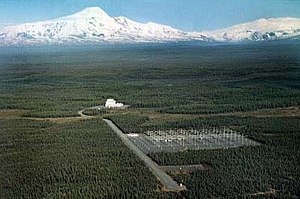
Image result for Aerial view of HAARP site, looking towards Mt. Sanford, in the Wrangell-St. Elias National Park[1]. (Image from HAARP used in accordance with terms.)

Aerial view of HAARP site
Related image


The High Frequency Active Auroral Research Program (HAARP) is an investigation project to "understand, simulate and control ionospheric processes that might alter the performance of communication and surveillance systems". Started in 1993, the project is proposed to last for a period of twenty years.


The project is jointly funded by US Air Force, Navy, and University of Alaska. It is said that the project is similar to numerous existing ionospheric heaters around the world, and has a large suite of diagnostic instruments that facilitate its use to increase scientific understanding of ionospheric dynamics. Though many have expressed fears of HAARP being used as a nefarious weapon, the scientists involved in aeronomy, space science, or plasma physics dismiss these fears as unfounded.


Contents
[hide]
1 The HAARP site
1.1 Ionospheric heating facilities
1.1.1 Platteville
1.1.2 Current facilities
1.2 Diagnostic instrumentation
2 Research at HAARP
3 Stated objectives
4 HAARP controversy
4.1 HAARP's critics
4.2 HAARP's supporters
5 See also
6 Patents
7 External links
The HAARP site
The project site is near Gakona, Alaska (lat. 62.39° N, long 145.15° W), just West of the Wrangell-Saint Elias National Park. An environmental impact statement led to permission for an array of up to 180 antennas to be erected. HAARP has been constructed at the previous site of an over-the-horizon radar installation. A large structure, built to house the OTH now houses the HAARP control room, kitchen, and offices. Several other small structures house various instruments. The Ionospheric Research Instrument (IRI) is the primary instrument at HAARP, which is a high-frequency (HF) transmitter system used to temporarily modify the ionosphere. Study of this modified volume yields important information for understanding natural ionospheric processes.


During active ionospheric research, the signal generated by the transmitter system is delivered to the antenna array, transmitted in an upward direction, and is partially absorbed, at an altitude between 100 to 350 km (depending on operating frequency), in a small volume a few hundred meters thick and a few tens of kilometers in diameter over the site. The intensity of the HF signal in the ionosphere is less than 3 microwatts per cm2, tens of thousands of times less than the Sun's natural electromagnetic radiation reaching the earth and hundreds of times less than even the normal random variations in intensity of the Sun's natural ultraviolet (UV) energy which creates the ionosphere. The small effects that are produced, however, can be observed with the sensitive scientific instruments installed at the HAARP facility and these observations can provide new information about the dynamics of plasmas and new insight into the processes of solar-terrestrial interactions. [2]


The HAARP site has been constructed in three distinct phases. The Developmental Prototype (DP) had 18 antenna elements, organized in three columns by six rows. It was fed with a total of 360 kilowatts (KW) combined transmitter output power. The DP transmitted just enough power for the most basic of ionospheric testing.


The Filled Developmental Prototype (FDP) had 48 antenna units arrayed in six columns by eight rows, with 960 KW of transmitter power. It was fairly comparable to other ionospheric heating facilities. This was used for a number of successful scientific experiments and ionospheric exploration campaigns over the years.


The Final IRI (FIRI) will be the final build of the IRI. It has 180 antenna units, organized in 15 columns by 12 rows, yielding a theoretical maximum gain of 31 dB. A total of 3600 KW (3.6 MW) of transmitter power will feed it. The total effective radiated power (ERP) will be 3,981 MW (96 dBW). As of the summer of 2005, all the antennas were in place, but the final quota of transmitters had not yet been installed.


Each antenna element[3][4] consists of a crossed dipole that can be polarized for linear, ordinary mode (O-mode), or extraordinary mode (X-mode) transmission and reception. Each part of the two section crossed dipoles are individually fed from a custom built transmitter, that has been specially designed with very low distortion. The ERP of the IRI is limited by more than a factor of 10 at its lower operating frequencies. Much of this is due to higher antenna losses and a less efficient antenna pattern.


HAARP can transmit between 2.8 and 10 MHz. This frequency range lies above the AM radio broadcast band and well below Citizens' Band frequency allocations. HAARP is only licensed to transmit in certain segments of this frequency range, however. When the IRI is transmitting, the bandwidth of the transmitted signal is 100 kHz or less. The IRI can transmit continuously (CW) or pulses as short as 100 microseconds (μs). CW transmission is generally used for ionospheric modification, while short pulses are frequently repeated, and the IRI is used as a radar system. Researchers can run experiments that use both modes of transmission, modifying the ionosphere for a predetermined amount of time, then measuring the decay of modification effects with pulsed transmissions.

Related image

Ionospheric heating facilities
Comparison of HAARP with other ionospheric facilities
(From the HAARP website, public use permitted if source cited)
The HAARP IRI is an ionospheric heater, one of many around the world. It is comparable in function and power to most of them.
Platteville
One of the earliest ionospheric heating facilities was at Platteville, Colorado, capable of radiating about 100 MW ERP. Early experiments included HF heater induced air-glow, heater-induced spread F, wide band heater-induced absorption, and heater-created field-aligned ionization. The Platteville heater operated from 1968 - 1984.
Current facilities
The United States has three ionospheric heating facilities: HAARP, HIPAS, near Fairbanks, Alaska, and (currently offline for modifications) one at the Arecibo Observatory in Puerto Rico. The European Incoherent Scatter Scientific Association (EISCAT) operates an ionospheric heating facility, capable of transmitting over 1 GW [5] (10,000,000,000 Watts) effective radiated power (ERP), near Tromsø in Norway. Russia has the Sura ionospheric heating facility, near Nizhniy Novgorod, capable of transmitting 300 MW ERP.

Diagnostic instrumentation
VHF radar
UHF radar
Digisonde
A digisonde provides ionospheric profiles, allowing scientists to choose appropriate frequencies for IRI operation. HAARP makes current and historic digisonde information available online.
HF receivers
Fluxgate magnetometer
A fluxgate magnetometer, built by the University of Alaska, Geophysical Institute is available to chart variations in the earth's magnetic field. Rapid and sharp changes may indicate a geomagnetic storm.
Induction magnetometer
An induction magnetometer, provided by the University of Tokyo, measures the changing geomagnetic field in the ULF (Ultra low frequency) range of 0-5 Hz.

Research at HAARP
Research at HAARP includes:
Ionospheric heating
Plasma line observations
Stimulated electron emission observations
Gyro-frequency heating research
Spread F observations
Airglow observations
Heating induced scintillation observations
VLF and ELF generation observations
Radio observations of meteors
Polar mesospheric summer echos : Polar Mesospheric Summer Echos (PMSE) have been studied using the IRI as a powerful radar, as well as with the 28 MHz radar, and the two VHF radars at 49 MHz and 139 MHz. The presence of multiple radars spanning both HF and VHF bands allows scientists to make comparative measurements that may someday lead to an understanding of the processes that form these elusive phenomenon.
Stated objectives
The HAARP project aims to direct a 3.6 MW signal, in the 2.8-10 MHz region of the HF band, into the ionosphere. The signal may be pulsed or continuous wave. Then effects of the transmission and any recovery period will be examined associated instrumentation, including VHF and UHF radars, HF receivers, and optical cameras. According to the HAARP team, this will advance the study of basic natural processes that occur in the ionosphere under the natural but much stronger influence of solar interaction, as well as how the natural ionosphere affects radio signals. This will enable scientists to develop techniques to mitigate these effects in order to improve the reliability and/or performance of communication and navigation systems, which would have a wide range of applications in both the civilian and military sectors.


The project is funded by the Office of Naval Research and jointly managed by the ONR and Air Force Research Laboratory, with the principal involvement of the University of Alaska. Fourteen other universities and educational institutions have been involved in the development of the project and its instruments, namely the University of Alaska, Penn State University (ARL), Boston College, UCLA, Clemson University, Dartmouth College, Cornell University, Johns Hopkins University, University of Maryland, College Park, University of Massachusetts, MIT, Polytechnic University, Stanford University, and the University of Tulsa. The project's specifications were developed by the universities, which are continuing to play a major role in the design of future research efforts. There is both military and commercial interest in its outcome, as many communications and navigation systems depend on signals being reflected from the ionosphere or passing through the ionosphere to satellites.


The HAARP project offers annual open days to permit the general public to visit the facility, and makes a public virtue of openness; according to the team, "there are no classified documents pertaining to HAARP." Each summer, HAARP holds a summer-school for visiting students, giving them an opportunity to do research with one of the world's foremost research instruments.
HAARP controversy
Numerous parties have found reasons to suspect that HAARP is more than the government claims it to be. Various theories draw on brain waves, confusion of the ionosphere with the neutral atmosphere, and over-stated claims of HAARP supporters. Many of the concerns about HAARP have been presented so as to be dismissed as "conspiracy theories" by some, while seen as proof of nefarious governmental plotting by others.
HAARP's critics
Waste:
The cost of building HAARP has exceeded the dollar-adjusted cost of similar facilities around the world. HAARP was constructed at the site of an obsoleted over-the-horizon radar facility for political reasons, but its location was less than ideal from a scientific perspective. Some believe that it was constructed as a pork barrel project for Alaska by Senator Ted Stevens.


Weapon:
The objectives of the HAARP project became the subject of controversy in the mid-1990s, following claims that the antennas could be used as a weapon. A small group of American physicists aired complaints in scientific journals such as Physics and Society, charging that HAARP could be seeking ways to blow other countries' spacecraft out of the sky or disrupt communications over large portions of the planet. The physicist critics of HAARP have had little complaint about the project's current stage, but have expressed fears that it could in future be expanded into an experimental weapon.


These concerns were amplified by Bernard Eastlund, a physicist who developed some of the concepts behind HAARP in the 1980s and proposed using high-frequency radio waves to beam large amounts of power into the ionosphere, energizing its electrons and ions in order to disable incoming missiles and knock out enemy satellite communications. The US military became interested in the idea as an alternative to the laser-based Strategic Defense Initiative. However, Eastlund's ideas were eventually dropped as SDI itself mutated into the more limited National Missile Defense of today. The contractors selected to build HAARP have denied that any of Eastlund's patents were used in the development of the project.


After the physicists raised early concerns, the controversy was stoked by local activism. In September 1995, a book entitled Angels Don't Play This HAARP: Advances in Tesla Technology by Nick Begich, Jr., son of the late Congressman Nick Begich, claimed that the project in its present stage could be used for "geophysical warfare". HAARP has subsequently become a target for those who have suggested that it could be used to test the ability "to deliver very large amount of energy, comparable to a nuclear bomb, anywhere on earth", "changing weather patterns", "blocking all global communications", "disrupting human mental processes" and mind control, communicating with submarines, and "x-raying the earth".


In April 1997, the then U.S. Secretary of Defense William Cohen publicly discussed the dangers of HAARP-like technology, saying "[o]thers are engaging even in an eco-type of terrorism whereby they can alter the climate, set off earthquakes, volcanoes remotely through the use of electromagnetic waves... So there are plenty of ingenious minds out there that are at work finding ways in which they can wreak terror upon other nations... It's real, and that's the reason why we have to intensify our efforts." This quote derives from an April 1997 counterterrorism conference sponsored by former Senator Sam Nunn, quoted from "DoD News Briefing, Secretary of Defense William S. Cohen, Q&A at the Conference on Terrorism, Weapons of Mass Destruction, and U.S. Strategy," held at the University of Georgia-Athens, Apr. 28, 1997.
Russians:
In August 2002, further support for those critical of HAARP technology came from the State Duma (parliament) of Russia. The Duma published a critical report on HAARP written by the international affairs and defense committees, signed by 90 deputies and presented to President Vladimir Putin. The report claimed that "the U.S. is creating new integral geophysical weapons that may influence the near-Earth medium with high-frequency radio waves ... The significance of this qualitative leap could be compared to the transition from cold steel to fire arms, or from conventional weapons to nuclear weapons. This new type of weapons differs from previous types in that the near-Earth medium becomes at once an object of direct influence and its component." However, given the timing of the Russian intervention, it is likely that it was related to a controversy at the time concerning the US withdrawal in June 2002 from the Russian-American Anti-Ballistic Missile Treaty. This high level concern is paralled in the April 1997 statement by the U.S. Secretary of Defense over the power of such electromagnetic weaponry. Besides , Russia owns a ionospheric heater as powerful as the HAARP , named 'Sura' ,located in Russia's central area, in a remote and desolate place some 150 km from the city of Nizhny Novgorod.


HAARP's supporters
The critics' views have been rejected by HAARP's defenders, who have pointed out that the amount of energy at the project's disposal is minuscule compared to the colossal energies dumped into the atmosphere by solar radiation and thunderstorms. A University of Alaska, Geophysical Institute scientist has compared HAARP to an "immersion heater in the Yukon River."


It would also be unable to effect any long-lasting changes; as the ionosphere is inherently a chaotically turbulent region, any artificially induced changes would be "swept clean" within seconds or minutes at the most. Ionospheric heating experiments performed at the Arecibo Observatory's ionospheric heater and incoherent scatter radar have shown that no matter how long the ionosphere is modified, it returns to normal within the same period of time.
Ionospheric heating cannot be performed while the sun illuminates the ionosphere for two reasons:
Solar UV creates the ionospheric D-region, which absorbs the radio waves used for ionospheric heating.
The solar flux overwhelms any effect of ionospheric heating. (needs to be verified John Elder 01:50, 13 Jun 2005 (UTC))
HAARP's supporters also point to the lack of serious scientific evidence to support some of the more exotic claims being made about HAARP, such as the conjecture that the system caused the 2003 North America blackout or earthquakes.
Most scientists reject the extreme criticism of HAARP as "utter nonsense," especially aeronomers and space-physicists who have a solid understanding of the accusations levelled at HAARP. Books, such as Angel's don't Play this HAARP, are often circulated and ridiculed in private. The scientific community puts forth little or no effort to defend HAARP, because they perceive those who attack HAARP as lacking sufficient understanding of science to criticize HAARP competently.


HAARP: weather manipulations, electro-magnetic warfare


HAARP a program for man-made control of weather events, weather manipulation… “spacequakes” … earthquakes, a huge sonic space weapon system, (out of control),
electro-magnetic warfare,
Learn about it.
Decide for yourself
The possibilities and theories ,,,
The science and technologies ,,,
The evidences and conspiracies ,,,
Connect the dots ,,,

An Overview of the HAARP Program

The High Frequency Active Auroral Research Program (HAARP) operates a major ionospheric research facility at Gakona, Alaska. As you look through our web site, you will find many technical details about this facility and about active ionospheric research in general. The web site also contains descriptive material on the Earth’s ionosphere and gives examples of some of the scientific results obtained at the HAARP facility.
There is a strong connection between the ionospheric research conducted at the HAARP facility and many practical issues that affect our everyday lives. All long-distance high frequency (HF) communication systems, such as ship-to-shore communications, transoceanic aircraft links, and portable systems used so frequently in Alaska and other remote areas, operate by bouncing signals off the ionosphere, a process often referred to as sky-wave propagation. By studying a small, limited portion of the ionosphere directly over the facility, research at the HAARP observatory is able to probe the nature of this dynamic medium, both in its naturally disturbed condition and when artificially stimulated, with the goal of being able to provide the fundamental understanding necessary to enhance the performance of such systems.

Monday, December 4, 2017

List of Eight Unbiased News Sources from Alex Chrum


A part of the problem with trying to be engaged in today’s world is the flow of information. We have access to more sources than ever before in history. And, sadly, much, I would hazard most of it comes packaged with so much bias, hidden agendas, or, flat out lies that what we are awash in is a sea of misinformation. Of course the problem with bias is that it is how we see the world, and so it becomes wildly difficult to pull back and get a larger perspective. I am on a quest for a manageable list of sources. While I don’t think this does the job, Alex Chrum’s list from 2012  remains one of the most popular and controversial lists on the web that at least tries. And I find it worthwhile seeing what she thinks. The following list includes direct links, and Ms Chrum’s comments.

Wikinews
Wikinews is perhaps one of the best places to find original and unbiased news stories. Like Wikipedia, it allows for collaboration with and feedback from the general public, ensuring that differing viewpoints are heard, and that lies and partisanship are actively called out.

AlterNet
AlterNet is one of my favorite online news sources. Their mission describes them as “award-winning news magazine and online community that creates original journalism and amplifies the best of hundreds of other independent media sources.” Their goal is “to inspire action and advocacy on the environment, human rights and civil liberties, social justice, media, health care issues, and more.”

The Real News
The Real News is another one of my favorites. The header of their website proclaims, “NO GOVERNMENT, CORPORATE OR ADVERTISING $$$,” which stands as a marker of self-proclaimed nonpartisanship, political and otherwise. They report on news from all around the world, offering stories ignored by most other major outlets.

Reuters
Reuters, an international news agency stationed in London, is so dedicated to journalistic objectivity that they sometimes receive criticism for it. After the September 11 attacks, they were accused of insensitivity because of their reluctance to use the word “terrorist” except when in quotes.

The Independent
The Independent is a U.K. newspaper that reports on news from around the world. While its status as “independent” often garners accusations of liberalism, the paper does not endorse any political party and offers a wide range of views on different topics.

PBS, BBC and CSPAN
PBS, BBC and CSPAN are also major notable outlets. When compared to others, such as Fox News, MSNBC, and CNN, they offer unprecedented objectivity.


Me, I have a rather different list.. Possibly of interest to some who find their way to this posting…


JULY 9, 2016 BY JAMES FORD


Friday, October 6, 2017

Christopher Columbus was too late! We were here already.

THE BLACK PRESENCE IN AMERICA BEFORE COLUMBUS
Christopher Columbus wasn't the only European explorer who made note of an African presence in the Americas upon his arrival. Historians revealed that at least a dozen other explorers, including Vasco Nunez de Balboa, also made record of seeing “Negroes” when they reached the New World.

 5 Pieces of Evidence That Prove Black People Sailed to the Americas Long Before Columbus


Columbus Himself

According to renowned American historian and linguist Leo Weiner of Harvard University, one of the strongest pieces of evidence to support the fact that Black people sailed to America before Christopher Columbus was a journal entry from Columbus himself. In Weiner’s book, “Africa and the Discovery of America,” he explains that Columbus noted in his journal that the Native
Americans confirmed “black skinned people had come from the south-east in boats, trading in gold-tipped spears.”


American Narcotics Discovered in Egyptian Mummies

The discovery of American narcotics in Egyptian mummies has left some historians amazed.
Recently, archaeologists discovered the presence of narcotics only known to be derived from American plants in ancient Egyptian mummies. These substances included South American cocaine from Erythroxylon and nicotine from Nicotiana tabacum. German toxicologist Svetla Balabanova reported the findings, which suggest that such compounds made their way to Africa

through trans-Atlantic trade that would predate Columbus’ arrival by thousands of years.


Egyptian Artifacts in North America

For years, Eurocentric archaeologists have largely turned the other cheek when it came to the discovery of artifacts from ancient Egypt being discovered in the Americas. According to Dr. David Imhotep, the author behind the book “The First Americans Were Africans: Documented Evidence,” “Egyptian artifacts found across North America from the Algonquin writings on the East Coast to the artifacts and Egyptian place names in the Grand Canyon” are all signs of an
early arrival in the Americas by Africans. This is also paired with a much earlier account of Black people with incredible skills at sea. Back in 445 B.C., the Greek historian Herodotus wrote of King Ramses III leading a team of Africans at sea with astounding seafaring and navigational skills. Together, both accounts would point to Africans sailing over to the New World before

Columbus.


Ancient Pyramids

Constructing pyramids was a highly specialized and complicated task that took the ancient Egyptians a lot of time to master. In ancient Egypt, there are signs of progression from the original stepped pyramid of Djoser to the more sophisticated pyramids that now stand at Giza.
According to historians, it would be impossible for any group of people to have built those same complex pyramids without going through the same progression. Professor Everett Borders noted the presence of completed pyramids in La Venta in Mexico but the unusual absence of an earlier forms of the pyramids. According to Borders, it’s a sign that Africans, having already
mastered the construction of pyramids in Egypt, sailed over to the New World and constructed these dual-purpose tombs and temples in the Americas.


Ancient African Skeletons Discovered in the New World

There have been many instances of archaeologists discovering skulls and skeletons that they believed clearly belonged to people of African descent. Polish professor Andrzej Wiercinski revealed the discovery of African skulls at Olmec sites in Tlatilco, Cerro de las Mesas and Monte Alban. Even more ancient African skeletons that would clearly predate Columbus’ arrival in the
Americas were discovered throughout Central America and South America with some even being unearthed in what is now California.


Before Columbus: How Africans Brought Civilization to America

It has now become common knowledge amongst academics that Christopher Columbus clearly did not discover America, not least because is it impossible to discover a people and a continent that was already there and thriving with culture. One can only wonder how Columbus could have discovered America when people were watching him from America’s shores?

Contrary to popular belief, African American history did not start with slavery in the New World. An overwhelming body of new evidence is emerging which proves that Africans had frequently sailed across the Atlantic to the Americas, thousands of years before Columbus and indeed before Christ. The great ancient civilizations of Egypt and West Africa traveled to the Americas, contributing immensely to early American civilization by importing the art of pyramid building, political systems and religious practices as well as mathematics, writing and a sophisticated calendar.

The strongest evidence of African presence in America before Columbus comes from the pen of Columbus himself. In 1920, a renowned American historian and linguist, Leo Weiner of Harvard University, in his book, Africa and the discovery of America, explained how Columbus noted in his journal that Native Americans had confirmed that “black skinned people had come from the south-east in boats, trading in gold-tipped spears.”

One of the first documented instances of Africans sailing and settling in the Americas were black Egyptians led by King Ramses III, during the 19th dynasty in 1292 BC. In fact, in 445 BC, the Greek historian Herodotus wrote of the Ancient Egyptian pharaohs’ great seafaring and navigational skills. Further concrete evidence, noted by Dr. Imhotep and largely ignored by Euro-centric archaeologists, includes “Egyptian artifacts found across North America from the Algonquin writings on the East Coast to the artifacts and Egyptian place names in the Grand Canyon.”

In 1311 AD, another major wave of African exploration to the New World was led by King Abubakari II, the ruler of the fourteenth century Mali Empire, which was larger than the Holy Roman Empire. The king sent out 200 ships of men, and 200 ships of trade material, crops, animals, cloth and crucially African knowledge of astronomy, religion and the arts.

African explorers crossing the vast Atlantic waters in primitive boats may seem unlikely, or perhaps, far fetched to some. Such incredible nautical achievements are not as daunting as they seem, given that
numerous successful modern attempts have illustrated that without an oar, rudder or sail ancient African boats, including the “dug-out,” would certainly have been able to cross the vast ocean in a matter of weeks.

As time allows us to drift further and further away from the “European age of exploration” and we move beyond an age of racial intellectual prejudice, historians are beginning to recognize that Africans were skilled navigators long before Europeans, contrary to popular belief.

Of course, some Western historians continue to refute this fact because, consciously or unconsciously, they are still hanging on to the 19th-century notion that seafaring was a European monopoly.

After all, history will tell you that seafaring is the quintessential European achievement, the single endeavor of which Europeans are awfully proud. Seafaring allowed Europe to conquer the world. The notion that black Africans braved the roaring waters of the Atlantic Ocean and beat Europeans to the New World threatens a historically white sense of ownership over the seas.

When most people think about ancient Mexico, the first civilizations that come to mind are the Incas, Aztecs and the Maya. However, during the early 1940’s archeologists uncovered a civilization known as the Olmecs of 1200 BC, which pre-dated any other advanced civilization in the Americas.

The Olmec civilization, which was of African origin and dominated by Africans, was the first significant civilization in Mesoamerica and the Mother Culture of Mexico.

Olmecs are perhaps best known for the carved colossal heads found in Central Mexico, that exhibit an unmistakably African Negroid appearance. Ancient African historian Professor Van Sertima has illustrated how Olmecs were the first Mesoamerican civilization to use a written language, sophisticated astronomy, arts and mathematics and they built the first cities in Mexico, all of which greatly influenced the Mayans and subsequent civilizations in the Americas. “There is not the slightest doubt that all later civilizations in [Mexico and Central America], rest ultimately on an Olmec base,” once remarked Michael Coe, a leading historian on Mexico.

Africans clearly played an intricate role in the Olmec Empire’s rise and that African influence peaked during the same period that ancient Black Egyptian culture ascended in Africa.

A clear indicator of pre-Columbus African trans-Atlantic travel is the recent archeological findings of narcotics native to America in Ancient Egyptian mummies, which have astounded contemporary historians. German toxicologist, Svetla Balabanova, reported findings of cocaine and nicotine in ancient Egyptian mummies. These substances are known to only be derived from American plants. South American cocaine from Erythroxylon coca and nicotine from Nicotiana tabacum. Such compounds could only have been introduced to Ancient Egyptian culture through trade with Americans.

Similarities across early American and African religions also indicate significant cross-cultural contact. The Mayans, Aztecs and Incas all worshipped black gods and the surviving portraits of the black deities are revealing. For instance, ancient portraits of the Quetzalcoatl, a messiah serpent god, and Ek-ahua, the god of war, are unquestionably Negro with dark skin and wooly hair. Why would native Americans venerate images so unmistakably African if they had never seen them before? Numerous wall paintings in caves in Juxtlahuaca depict the famous ancient Egyptian “opening of the mouth” and cross libation rituals. All these religious similarities are too large and occur far too often to be mere coincidences.

Professor Everett Borders notes another very important indication of African presence, which is the nature of early American pyramids. Pyramid construction is highly specialized. Ancient Egypt progressed from the original stepped pyramid of Djosser, to the more sophisticated finished product at Giza. However, at La Venta in Mexico, the Olmecs made a fully finished pyramid, with no signs of progressive learning. Olmecian and Egyptian pyramids were both placed on the same north-south axis and had strikingly similar construction methods. Tellingly, all of these pyramids also served the same dual purpose, tomb and temple.

Ancient trans-Atlantic similarities in botany, religion and pyramid building constitute but a fraction of the signs of African influence in ancient America. Other indicators include, astronomy, art, writing systems, flora and fauna.

Historically, the African people have been exceptional explorers and purveyors of culture across the world. Throughout all of these travels, African explorers have not had a history of starting devastating wars on the people they met. The greatest threat towards Africa having a glorious future is her people’s ignorance of Africa’s glorious past.

Pre-Columbus civilization in the Americas had its foundation built by Africans and developed by the ingenuity of Native Americans. Sadly, America, in post-Columbus times, was founded on the genocide of the indigenous Americans, built on the backs of African slaves and continues to run on the exploitation of workers at home and abroad.

Clearly, Africans helped civilize America well before Europeans “discovered” America, and well before Europeans claim to have civilized Africa. The growing body of evidence is now becoming simply too loud to ignore. It’s about time education policy makers reexamine their school curriculums to adjust for America’s long pre-Columbus history.

Garikai Chengu is a scholar at Harvard University. Contact him on garikai.chengu@gmail.com

The original source of this article is Global Research

Copyright © Garikai Chengu, Global Research , 2015

THE BLACK PRESENCE IN AMERICA BEFORE COLUMBUS

by The African United Front © 2016
vansertima2
Professor Ivan Van Sertima


“The African presence is proven by stone heads, terra cottas, skeletons, artifacts, techniques and inscriptions, by oral traditions and documented history, by botanical, linguistic and cultural data. When the feasibility of African crossings of the Atlantic was not proven and the archaeological evidence undated and unknown, we could in all innocence ignore the most startling of coincidences. This is no longer possible. The case for African contacts with pre-Columbian America, in spite of a number of understandable gaps and a few minor elements of contestable data, is no longer based on the fanciful conjecture and speculation of romantics. It is grounded now upon an overwhelming and growing body of reliable witnesses.”  –Ivan Van Sertima, They Came Before Columbus.

On September 24th, 2016, the National Museum of African American History and Culture opened in Washington, D.C. The New York Times has stated that this long awaited monument to centuries of African American suffering and triumphs “makes a powerful declaration: The African-American story is a central part of the American story.”

How central the role was that African Americans played has never been completely told and, unfortunately, a pivotal part of that history has been excluded from this exhibit. In truth, Africans began coming to the Americas thousands of years before Columbus; and the evidence of their presence, though systematically ignored by mainstream scholars, is overwhelming and undeniable. As Columbus Day (October 12) approaches and as we celebrate the 40th anniversary of the publication of They Came Before Columbus by the late Rutgers University professor, Ivan Van Sertima, we must reveal to the world the grandeur of Africa by highlighting the achievements of some of its great navigators and rulers.


EYEWITNESS ACCOUNTS


Ever since Christopher Columbus first suggested that Black Africans preceded him to the New World, a number of scholars have investigated this contention. In his Journal of the Second Voyage, Columbus wrote that when he reached Haiti, then labeled Espanola, the native people told him that black skinned people had come from the south and southeast in ships trading in gold tipped metal spears. The following is recorded in Raccolta, part I, volume I: “Columbus wanted to find out what the Indians of Espanola had told him, that had come from the south and southeast, [N]egro people who brought those spear points made of a metal which they call guanin, of which he had sent samples to the king and queen for assay and which was found to have 32 parts – 18 of gold, 6 of silver, and 8 of copper.”1 Curious about the validity of this story, Columbus did indeed send samples of these spears back on a mail ship to Spain to be examined, and it was found that the ratio of properties of gold, copper, and silver alloy were identical to the spears then being forged in African Guinea.2

In a book on the life of Columbus, his son, Ferdinand, reported that his father saw Black people himself when he reached the region just north of the country today called Honduras. Nearly a dozen other European explorers also found Black people in the Americas when they reached the Western Hemisphere. In September 1513, Vasco Nunez de Balboa led his men down the slopes of Quarequa, which was near Darien, now called Panama, where they saw several Black men, who were captured by native Americans.3 “Balboa asked the Indians whence they got them [the Black people], but they could not tell, nor did they know more than this, that men of this color were living nearby and they were constantly waging war with them. These were the first Negroes that had been seen in the Indies.”4 Peter Martyr, the first prominent European historian of the New World, stated that the Black men seen by Balboa and his companions were shipwrecked Africans who had taken refuge in the local mountains.5  

Father Fray Gregoria Garcia, a priest of the Dominican order who spent nine years in Peru during the early sixteenth century, identified an island off of Cartagena, Columbia as the place where the Spanish first found Black people in the New World. As in Darien, these Africans were also captives of war among the native Americans.6 Also during the sixteenth century – after the advent of Columbus, but before the universal enslavement of Africans – Cabello de Balboa cited a group of seventeen Black people who, after being shipwrecked in Ecuador, became governors of an entire province of native Americans.7

TESTIMONY IN STONE

Although eyewitness accounts of early European explorers may be the best evidence of an African presence in the New World that preceded Columbus, it is certainly not the only evidence. “As early as the nineteenth century” wrote Jonathan Leonard, a specialist on early Mexico, “reports had come from this coastal region [the Mexican gulf coast] of gigantic heads with Negroid features.”8 The first of these heads was discovered by Jose Melgar in Veracruz in 1862. He wrote two articles about this particular head, one in the Boletin de Geografia y Estadistica, and the other in the respected Sociedad Mexicana de Geografia y Estadistica. “Melgar’s mind,” wrote art historian Alexander von Wuthenau,

“not yet tainted by certain currents of modern (and perhaps not so modern) anthropology, reacted quite normally to this newly found evidence of [the] black man’s presence in ancient America. He furthermore cites a document of Francisco Nunez Vega (1691), who describes an ancient calendar found in Chiapas that mentions seven ‘negritos’ representing the seven planets.”9  


In describing the Olmec head, Melgar wrote that “what astonished me was the Ethiopic [Black African] type which it represents. I reflected that there had undoubtedly been Blacks in this country and this had been in the first epoch of the world…”10 Since Melgar’s discovery sixteen other colossal stone heads have been found in many parts of Mexico, including ancient sacred sites such as La Venta and Tres Zapotes in southern Mexico. Ranging up to 11.15 feet in height and weighing 30 to 40 tons, these statues generally depict helmeted Black men with large eyes, broad fleshy noses and full lips.

They appear to represent priest-kings who ruled vast territories in Mesoamerica [Mexico and Central America] during the Olmec period, which is to be considered later herein. On the strength of the colossal Olmec heads and other evidence, several early Mexican scholars concurred with Melgar’s contention that Black people settled the New World, particularly Mexico, in antiquity. “In a very ancient epoch,” wrote historian Riva Palacio, “or before the existence of the Otomies [native Americans] or better yet invading them, the Black race occupied our territory… This race brought its religious ideas and its own cult.”11

Author C.C. Marquez, adds that “[s]everal isolated but concordant facts permit the conjecture that before the formation and development of the three great ethnographic groups…a great part of Amcerica was occupied by [the] Negroid type.”12

Historian Nicholas Leon was of a similar opinion:

“The oldest inhabitants of Mexico, according to some, were Negroes, and according to others, the Otomies. The existence of Negroes and giants is commonly believed by nearly all the races of our soil… Several archaeological objects found in various locations demonstrate their existence… Memories of them in the most ancient traditions induce us to believe that the Negroes were the first inhabitants of Mexico”13


Another authority, J.A. Villacorta, has written: “Any way you view it, Mexican civilization had its origin in Africa.”14 Finally, historian Orozco y Berra declared in his History of the Conquest of Mexico, that there was, unquestionably, a significant, ongoing, and intimate pre-Columbian relationship between Mexicans and Africans.15
In addition to Mexican scholars, a number of others have described the colossal stone heads in terms similar to those of Melgar. Chief among them was the American Olmec specialist Matthew Stirling. He wrote:

“Cleared of the surrounding earth, it [the colossal head] presented an awe-inspiring spectacle. Despite its great size, the workmanship is delicate and sure, its proportions perfect… The features are bold and amazingly negroid in character.”16

Another authority, Selden Rodman speaks of the “…colossal ‘Negroid’ heads…”17 European journalist and Olmec specialist, Walter Hanf, describes “carved colossal heads with Negroid features, deformed and close-shaven skulls, blunt noses, and protruding lips.”18 Author and anthropologist Sharon McKern states that the colossal heads are “inescapably Negroid.”19

Historian Nicholas Cheetham writes of the “exaggeratedly Negroid features” of the stone heads.20 Finally, another scholar, Floyd Hayes, has provided the following thought provoking assessment of the racial significance of the colossal stone heads:

“One might merely ask himself: if Africans were not present in the Americas before Columbus, why the typically African physiognomy on the monuments? It is in contradiction to the most elementary logic and to all artistic experience to suggest that these ancient Olmec artists could have depicted, with such detail, African facial features they had never seen.”21

FIGURINES IN CLAY

According to Von Wuthenau, “[t]he startling fact is that in all parts of Mexico, from Campeche in the east to the southeast of Guerrero, and from Chiapas, next to the Guatemalan border, to the Panuco River in the Huasteca region (north of Veracruz) archeological pieces representing Negro or Negroid people have been found, especially in archaic or pre-classic sites. This also holds true for large sections of Mesoamerica and far into South America – Panama, Columbia, Ecuador, and Peru…”22 For years the Diego Rivera Museum of Mexico housed the Alexander von Wuthenau Collection of remarkable figurines depicting Black priests, chiefs, dancers, wrestlers, drummers, and others across the social spectrum. An examination of this artwork, wrote Van Sertima,


“reveals the unmistakable combination of the kinky hair, broad nose, generous lips, frequency of prognathism (projecting jaws), occasional goatee beard, and sometimes distinctly African ear pendants, hairstyles, tattoo markings, and coloration.”23

SKULLS AND SKELETONS

Author David Imhotep cites a number of scientists and scholars who have identified prehistoric skulls and skeletons of Black people of the Austro-Negrito type, dating back to as early as 56,000 years ago, throughout the New World.24 This appears to be substantiated by more recent discoveries.25

Our focus here, however, is on the Negroid skulls and skeletons that have been discovered at ancient and medieval New World sites. One of the world’s most renowned craniologists, Polish professor Andrzej Wiercinski, revealed to the 41st Congress of Americanists in Mexico in September 1974, that African skulls had been discovered at Olmec sites in Tlatilco, Cerro de las Mesas and Monte Alban. In using standard scientific measurements of skull shape and the formation of the face, Wiercinski found “a clear prevalence of the total Negroid pattern…”26

In this same vein, historian Frederick Peterson has written that “[w]e can trace the progress of man in Mexico without noting any definite Old World influence during this period (1000-650 B.C.) except a strong Negroid substratum connected with the Magicians [Olmecs].”27 Finally, in February of 1975, a team from the Smithsonian Institute reported the discovery of two Negroid male skeletons in a grave in the U.S. Virgin Islands. Scientific analysis of the surrounding soil suggests that the skeletons date back to about 1250 A.D.28  

THE OLMECS

Any objective analysis of the evidence clearly shows that Black people reached the Americas thousands of years before Columbus. But, in the words of Van Sertima, “proof of contact is only half of the story. What is the significance of this meeting of Africans and Native Americans? What cultural impact did the outsiders have on American civilization?”29 It would appear that the impact of the African explorers on the New World as a whole was widespread, profound and enduring. In this summary, however, we are confining ourselves to “a particular geographic region (the Gulf of Mexico), a particular culture complex or civilization (known as Olmecs), and a particular period of history (948-680 B.C.)”.30


The name Olmec means “Dweller in the land of Rubber” and could technically be applied to anyone who lived in the jungle areas of the Mexican Gulf Coast in antiquity.31 For centuries the indigenous people there created and perpetuated a local culture that varied little from its surroundings. Then, suddenly, sometime after the first millennium B.C., this region became the center of a full-blown civilization that had no detectable antecedents. This high culture is now known as the Olmec civilization. According to Michael Coe, the world’s foremost authority on Olmec culture, “There is not the slightest doubt that all later civilizations in Mesoamerica, whether Mexican or Mayan, rest ultimately on an Olmec base.”32 Van Sertima adds: “The Olmec civilization was formative and seminal: it was to touch all others on this continent, directly or indirectly.”33

Some of the Olmec sculptures depicting human beings are so decidedly Negroid that many scholars long thought that the indigenous Olmec culture itself was of Black origin. The original Olmecs were Native Americans who were very probably colonized and acculturated by Africans who settled their homeland. “…I have never claimed,” writes Van Sertima, “that Africans created or founded the Olmec civilization…They left a significant influence upon it…and that is more than can be said of any other Old World group visiting the native American or emigrating to the continent before Columbus.”34


A study of the Olmec civilization reveals elements that are remarkably similar to the ritual traits and techniques in the Egypto-Nubian world of the same period. When viewed in their totality these cultural similarities strongly suggest that there was contact between the ancient Africans from the Nile Valley and the Olmec people. Conspicuous among these shared elements are those adopted by the monarchies in both civilizations, “and appear in a combination too arbitrary and unique to be independently duplicated.”35 They include the following: The double crown, the royal flail, the sacred boat or ceremonial bark of the kings, the religious value of the color purple and its special use among priests and people of high rank; the artificial beard, feathered fans and the parasol or ceremonial umbrella. In an oral tradition recorded in the Titulo Coyoi, a major document of the Maya, the parasol is specifically mentioned as having been brought to the New World by foreigners who traveled by sea from the east.36

The Indian scholar, Rafique Jairazbhoy, has studied the ancient Egyptians and the Olmecs in great detail and has pointed to many other ritual parallels between the two groups. For example, there are hand-shaped incense spoons found in Olmec sites that are almost identical to their Eyptian counterparts and have similar names. In Egypt there are numerous sculptures depicting four figurines symbolically holding up the sky. A similar sculpture has been discovered at the Olmec site of Portrero Nuevo. In Egyptian mythology the human headed bird, Ba, flies out of the tomb. A bird with a human head also appears in a relief from Izapa, Mexico;37 “and Mexican sarcophagi leave an opening in the tomb as do the Egyptians, for the bird’s escape from the dead.”38

Jairazbhoy also shows remarkable similarities between several gods in the Egyptian underworld and those of Olmec Mexico. The most striking similarities between the two cultures are seen in the magnificent stone structures that have been found on both sides of the Atlantic. In America we have no antecedents for the construction of pyramids, for example, “whereas there is a clear series of evolving steps and stages [in pyramid building] in the Egypto-Nubian world.”39

Van Sertima asks, “Where do the first miniature step pyramid and the first manmade mountain or conical pyramid appear in America? On the very ceremonial court and platform where four of the African-type heads were found in the holy capital of the Olmec world, La Venta. Even among the Maya, where Dr. Hammond has found 2000 B.C. villages, no pyramid appears until much later.”40

While we could continue to cite infinite similarities between ancient African and New World cultures in various fields including linguistics and botany, let us turn instead to consider the likely origin of the Africans who appear to have reached and profoundly influenced American culture thousands of years before Columbus. The currents off Africa serve as veritable conveyor belts to the Caribbean, the Gulf of Mexico and the northeastern corner of South America. Mayan and African oral traditions speak of pre-Columbian expeditions across the Atlantic from east to west;41 and the modern explorer, Thor Heyerdahl, has demonstrated that ships modeled after the ancient Egyptian papyrus boat could indeed successfully make such a journey.42 Other Africans also built sturdy, seaworthy ships.43  

CONCLUSION

Who, then, were the Africans who sailed to America in antiquity? Jairazbhoy believes that the earliest settlers were ancient Egyptians led by King Ramesis III, during the nineteenth dynasty.44 Van Sertima contends that “a small but significant number of men and a few women, in a fleet protected by a military force, moved west down the Mediterranean toward North Africa in the period 948-680 B.C…and got caught in the pull of one of the westward currents off the North African coast, either through storm or navigational error,” and were carried across the Atlantic to the New World. In his view this fleet was probably led by Phoenician navigators who had been pressed into service by the Nubian pharaohs of Egypt during the twenty fifth dynasty.45


Other scholars contend that numerous navigators sailed to the Americas from West Africa when the medieval empires of Ghana, Mali and Songhay flourished in that region. In light of the vast evidence available (far more, for example, than that of the Vikings) of an African presence in ancient America, why is this information virtually unknown to the general public? Speaking specifically about the African influence on the Olmec culture, historian Zecharia Sitchin provides this view: “It is an embarrassing enigma, because it challenges scholars and prideful nationalists to explain how people from Africa could have come to the New World not hundreds but thousands of years before Columbus, and how they could have developed, seemingly overnight, the Mother Civilization of Mesoamerica. To acknowledge the Olmecs and their civilization as the Mother Civilization of Mesoamerica means to acknowledge that they preceded that of the Mayans and Aztecs, whose heritage the Spaniards tried to eradicate and Mexicans today are proud of.”47

In a world accustomed to suppressing, distorting, ignoring or denying the achievements of Black Africans it is difficult to accept the historical paradigm shift mandated by the evidence presented here. For, whether we accept the facts or not, Jairazbhoy appears to have been right when he wrote: “The black began his career in America not as slave but as master.”48


To Be Continued

Saturday, August 12, 2017

Virginia governor declares state of emergency as white nationalist rally in Charlottesville breaks out in violence

Screen Shot 2017 08 12 at 12.04.21 PM

Virginia Governor Terry McAuliffe has declared a state of emergency as demonstrations in Charlottesville erupted into violence Saturday morning.

The demonstrations precede a "Unite the Right" rally called by white nationalists in response to a plan to remove a statue of Confederate general Robert E. Lee from a park in Charlottesville, Virginia.

Thousands of white nationalist protesters, as well as groups that oppose them, have clashed during demonstrations that are currently ongoing.

Images and videos of the protest have appeared on Twitter and depict police confronting protesters and deploying tear gas.

The announcement came shortly after city and Albemarle County officials declared a local state of emergency as protests in the Virginia college town grew violent.


Skirmishes ignited hours before a scheduled noon protest at Charlottesville's Emancipation Park, where white supremacists, white nationalists and alt-right groups were set to protest the city's decision to remove a statue of Confederate Gen. Robert E. Lee. 

Soon after the emergency declaration, police declared an unlawful assembly at the park and began asking crowds there to disperse. 

Video of the chaos shows police dressed in riot gear marching on the scene as some people appeared to leave the park. 

Tensions were high in Charlottesville ahead of the protest. Men holding bats and clubs and wearing helmets clashed with one another in the streets, with police doing little to break up the violence according to The Washington Post.


A protest on the campus of the University of Virginia on Friday that appeared to be connected to Saturday's event resulted in at least one person taken away in handcuffs.

Virginia governor declares state of emergency as Charlottesville protests turn violent